Some businesses are more well-suited to e-Residency than others – learn the most commonly applied based on real case studies

We’re frequently asked by people whether e-Residency is a good solution for them.
The answer to this seemingly simple question very much depends on individual circumstances, which are certainly diverse in the e-resident community…
Since the beginning, we have been very clear that e-Residency suits certain business types and objectives, sectors, or geographies better than others. This is largely thanks to the inherently digital nature of e-Residency itself.
E-Residency’s unique, government-issued digital identity allows people outside of Estonia to verify themselves securely online and access diverse public and private Estonian e-services and the EU market from wherever they are in the world.
It follows, therefore, that a major motivation and value-driver of e-residents to start a company based in the EU and run it remotely comes down to location independence. From digital nomads to business owners constantly on the road, any tools that support mobile business management are essential, e-Residency being no exception.
Over 130,000 people from over 170 countries have applied for e-Residency since the programme began in 2014. E-residents have founded over 37,000 companies. While our e-residents are as diverse as any global community, we do see a few common value-drivers behind their decisions to take up e-Residency, like location (or lack of), business type, industry, and personal goals.
To illustrate further, we thought it would be interesting to present to you some of the most suitable cases by introducing you to real-life e-residents.
This way, we hope we can go some way to answer the overarching, million-dollar question…
In general, e-Residency is best suited to entrepreneurs or freelancers who:
Let’s break these down a little more by considering a few common scenarios.
Yes – you have described an extremely common setup among our e-resident community. A host of full-time and part-time freelancers, consultants, and solopreneurs provide services or digital products to clients through their Estonian companies in a variety of sectors, including IT, marketing, management consulting, coaching, publishing, and more.
Why? Because:
These were just some of the benefits that attracted Italian e-resident Mike, who builds, markets, and supports multiple SaaS products through his Estonian company. Read his story:
Additionally, setting up an OÜ now is a good way to start small and easy to grow your few invoices to a steady stream. This is how German e-resident Luka grew his multilingual translation and content creation company, The Happy Beaver,s into a global business with e-Residency. Read more:
Yes – think of Estonia as a safe haven from Brexit and e-Residency as an effective bridge between you and the EU market. You can move or keep your company in the EU and use Estonia as a digital base to expand regionally and beyond.
E-resident Priya set up her company in Estonia to avoid any ramifications from Brexit. Read more about her decision:
Plus, even entrepreneurs with a fixed location quickly find that running their digital business out of Estonia reduces bureaucracy and allows for more efficiency. An Estonian company will be a recognised business form for your Nordic, Baltic and EU clients and a great vehicle with which to expand into these regions further.
David and three co-directors became e-residents and registered Saher Europe in Estonia as the European arm of their security consultancy. Read their story:
Yes – e-Residency is highly suited to people like you, i.e. location-independent entrepreneurs or digital nomads. Company registration and setup is quick and easy, administration is minimal, and you can carry your business in your pocket with you while you travel.
Perpetual traveller and e-resident Nevena is one such case of how e-Residency can support a nomadic lifestyle. She runs her recruitment business Recrooit with minimal fuss on the road from Serbia to the US and many other locations in between. Read Nevena’s story:
Multi-director companies require all directors to become e-residents before you establish the legal entity. Once it’s set up, though, experience how seamless remote business management can be regardless of where each of you happen to be at any moment.
Global marketing consulting company Mansiontech OÜ is co-directed by e-residents Georg, from Austria, and Ian, from Brazil. Despite working in very different time zones, the founders manage the company remotely thanks to e-Residency. Read their story:
Yes – there are many entrepreneurs from Ukraine or neighbouring CIS countries operating similar businesses selling digital products and services with the help of e-Residency.
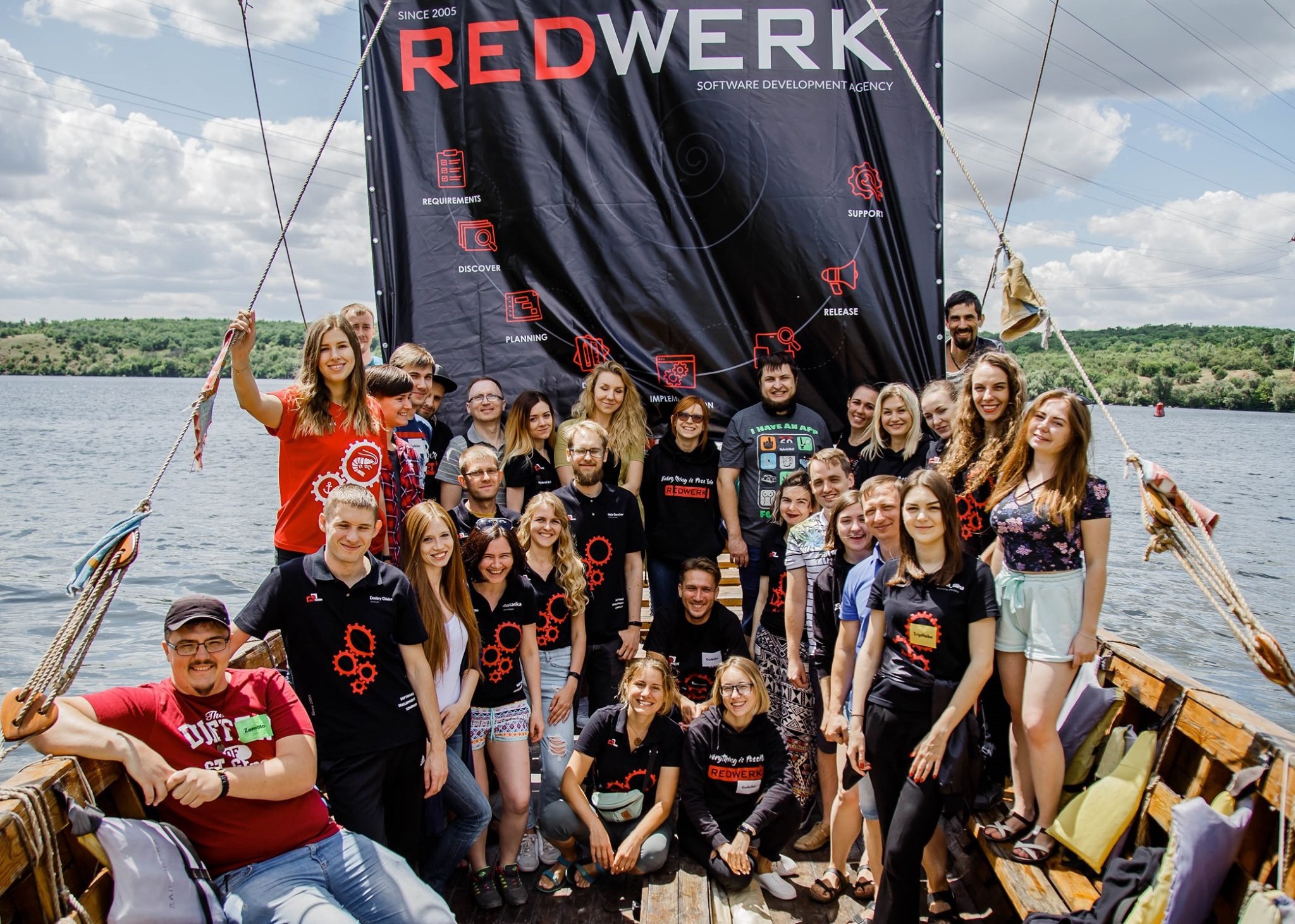
Ukrainian e-residents like Konstantin, who is growing his software development company Redwerk OÜ from its digital base in Estonia. Read more:
Having an Estonian company makes it easier to apply for a range of financial services and business tools. It's important to note, though, that neither e-Residency nor opening an Estonian company guarantee that banks or fintech services will grant you an account.
It also means you are operating your business in an open business environment and within the EU’s legal frameworks. It will also be easier to trade in euros, a convenient and stable currency for clients, and make payments more easily within the Single Euro Payments Area (SEPA). Estonia’s digital infrastructure, as well as almost all private services, can be accessed in Russian or English (or Estonian if you’re a talented linguist!), so you’re likely to find it easy to use all of these services in a language familiar to you.
These were many of the reasons that Ukrainian Alexander became an e-resident and founded PRNEWS.IO in Estonia in 2018. Read Alexander’s story:
It’s important to point out that the above examples are not exhaustive. Other business types and situations may have good reasons to operate in Estonia with e-Residency.
Remember, when deciding whether e-Residency is suitable, context matters.
In addition to your business plans, it’s key to look at other, more systemic or context-specific factors, like:
To ask about your own specific circumstances, contact our customer support team.
And finally, let’s cover the people who definitely won't benefit from e-Residency: