

estonia’s tax system most competitive in the world
For the twelfth year in a row, Estonia is #1 in International Tax Competitiveness. Find out what makes this tax system great for entrepreneurs.

For the twelfth year in a row, Estonia’s tax system has topped the International Tax Competitiveness Index (ICTI). This means that once again, Estonia has the best tax code of all OECD countries.
A well-structured tax code is a good determining factor of a country’s economic performance. Taxpayers can more easily comply with a properly structured tax code and thus promote economic development, which in turn improves the country’s public revenues. On the contrary, poorly structured tax systems “can be costly, distort economic decision-making, and harm domestic economies”. So says the Tax Foundation, the US-based tax policy non-profit and publisher of the ICTI.
OECD countries approach taxation in a variety of ways, resulting in a need for comparison to critically evaluate performance. For that purpose, the Tax Foundation developed the ITCI. The ITCI looks at more than 40 tax policy variables to measure the competitiveness and neutrality of country tax codes. These include tax rates and structures of a country's corporate taxes, individual income taxes, consumption taxes, property taxes, as well as the treatment of profits earned overseas.
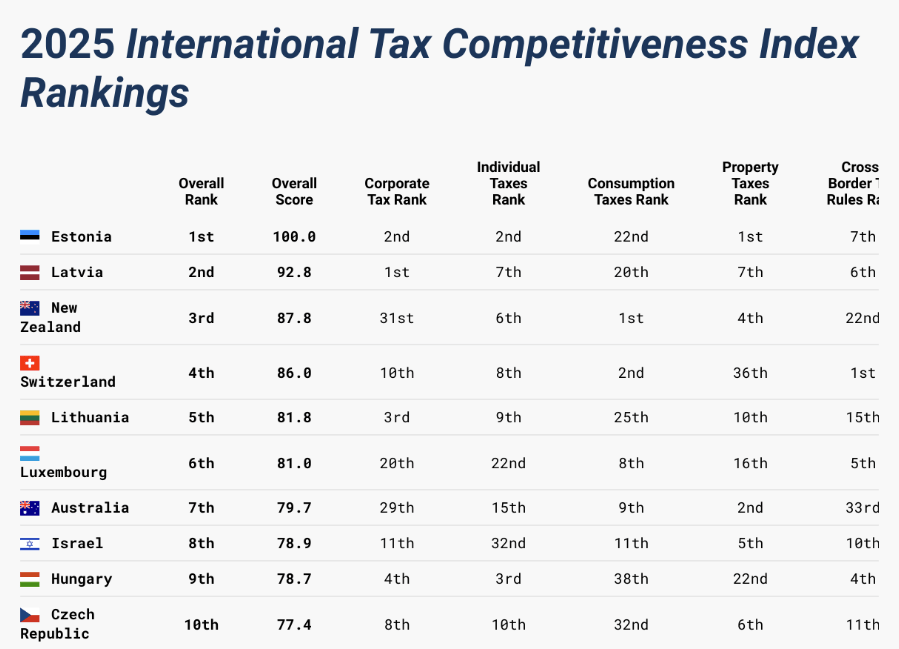
Estonia's top score in 2025 is again driven by four features of its tax system:
- 1. a cash-flow corporate tax system with a 22% tax rate only applied to distributed corporate profits
- 2. a flat 22% tax on individual income that does not apply to personal dividend income
- 3. property tax applies only to the value of land, rather than to the value of real property or capital, and
- 4. Estonia's double tax treaty network helps domestic corporations get credits for foreign tax liabilities.
And just as Estonian citizens and tax residents benefit, so too can e-residents. While Estonia is not a tax haven and e-Residency doesn’t exempt you or your companies from dual tax residency or foreign tax liabilities, Estonia's clear tax system and network of more than 60 tax treaties can be a huge advantage for foreign entrepreneurs looking for a place to base their borderless business.
This includes opportunities to take advantage of the country's clear tax system, transparent business environment, and efficient digital services. Together, these features keep compliance efforts and costs low and the time to file taxes to a minimum.
E-residents can take further steps to make their companies tax residents of Estonia. This will involve structuring your corporate operations to ensure more business presence in Estonia. For example, renting an office or site location, hiring employees, registering assets or intellectual property, and holding board meetings in Estonia.
We recommend speaking to a tax expert to get advice on international conventions and the tax codes of Estonia. They can also help you optimise your corporate tax structure taking into account your own geographical location and business operations.
To browse expert international and country-specific tax advisers, visit the e-Residency Marketplace.
Estonian taxes in 2026 and beyond
A number of changes to Estonian tax law have been announced by the Estonian Government over the past couple of years – but some of those changes were cancelled. Generally speaking, the overall tax system in Estonia will remain simple and transparent going forward.
The main changes affecting e-resident businesses are listed below. To help prepare e-residents for future changes and their implications for your businesses, we will update this article as new changes are announced.
VAT
Estonia increased the standard VAT rate from 22% to 24% in July 2025. All Estonia-registered companies that carry out business in Estonia need to register for VAT if their annual turnover is over €40,000.
Personal and corporate income tax
There were proposed raises to both the personal and corporate income tax rates, but currently these are expected to remain at 22%.
You can find all proposed changes and read more specifics on the Estonian Tax and Customs Board website.
More from e-Residency
- Sign up for our newsletter
- Watch fresh video content - subscribe to our Youtube channel
- Meet our team and e-residents - register for our next Live Q&A
Share this article:
Read next

French-Estonian trade reached a record €1.2 billion in 2025

Survey: 69% of Germans open to founding in another EU country

What founders from 35 countries learned about Estonia in one day

Every second Estonian startup involves e-residents