digital id cards: what the UK can learn from estonia and spain

Compare how Spain, Estonia, and the UK are building digital ID systems – and why Estonia’s trusted approach is the model others can learn from.

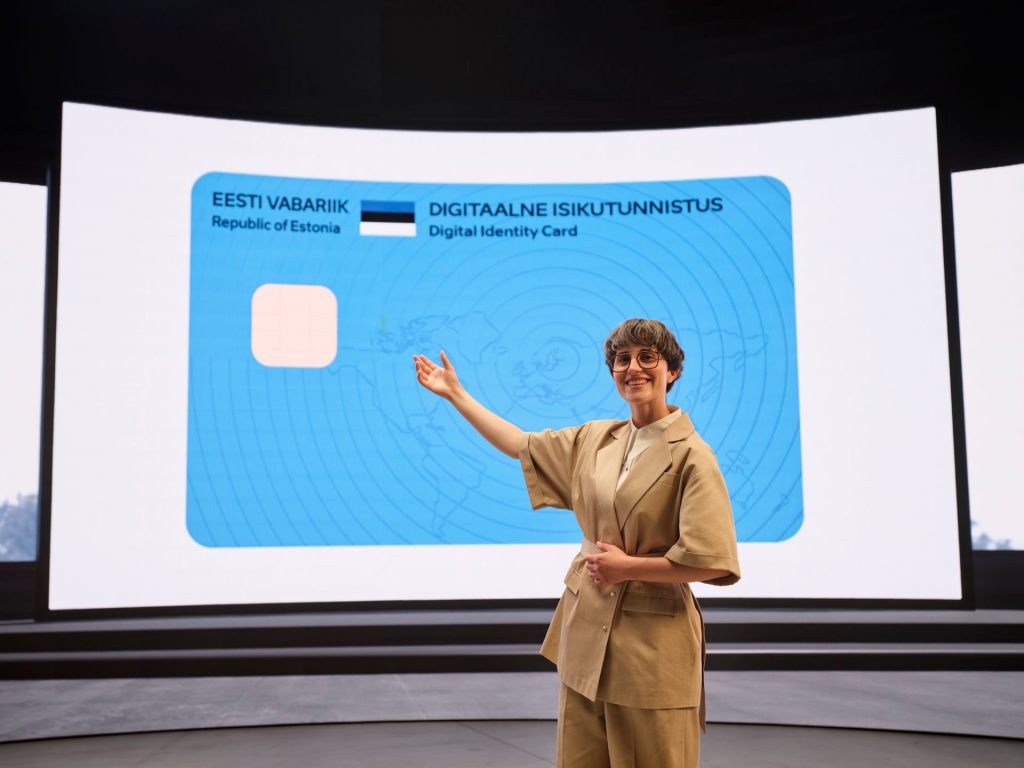
A woman presents Estonia's e-Residency digital ID card
In addition to citizen digital IDs, Estonia offers the world's first e-Residency digital ID / Photo: Kalle Veesaar

When I first arrived in Spain, digital ID was not a concept on my radar.

I came from the UK where no state ID existed, to a country where every citizen was used to carrying a physical card that identified them on demand to appropriate authorities. As a foreigner, I had to carry my passport at all times, along with an A4 folded piece of paper that confirmed my residency registration.

Indeed, there was a lot of paper! Everywhere I went – to register at the town hall, open a bank account, or even buy a SIM card – another photocopy was demanded: my passport, residence status, and proof of address, even though I was legally European back then. Every new official or sales assistant seemed to need another stamped page, to be filed in a cabinet somewhere, where it was probably never looked at again.

Years later, when I became an Estonian e-⁠resident, I discovered a completely different way to prove my identity and my actions. My digital ID card – issued by Estonia’s government – lets me sign contracts, file taxes, and run a company entirely online, from anywhere. It’s fast, secure, and accepted for almost every interaction with state and private entities within Estonia.

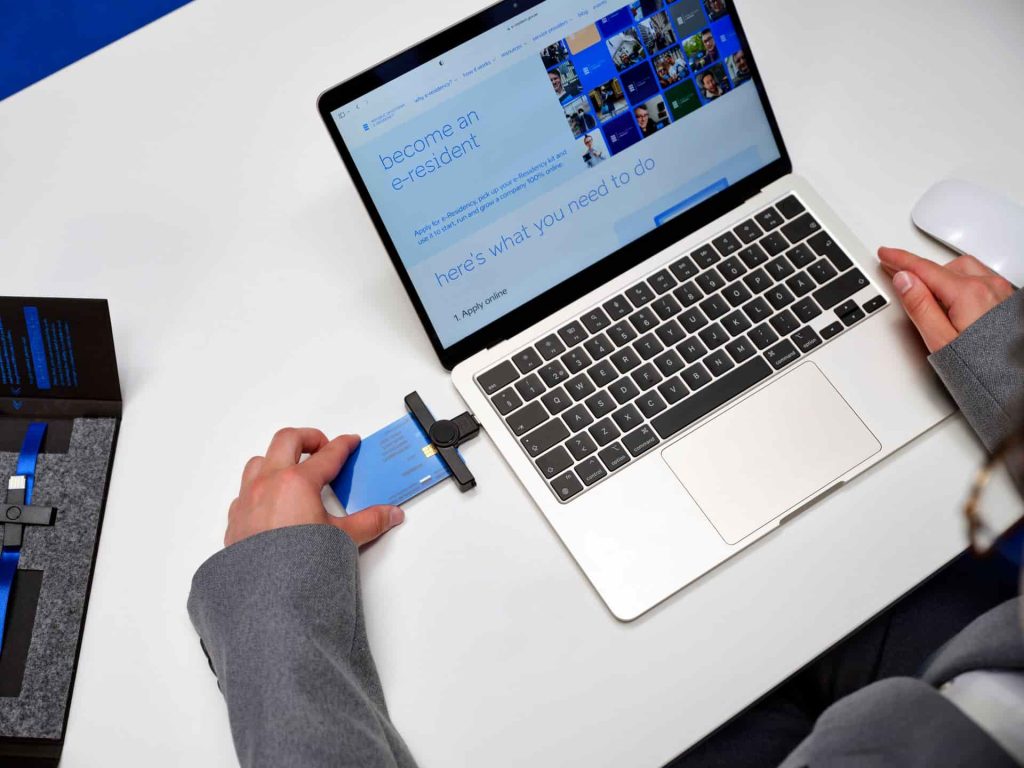
A person using their e-Residency digital ID card
Securely sign documents electronically with the e-Residency digital ID / Photo: Kalle Veesaar

Spain, too, now has a system of digital signatures and certificates, which I can use to access some statutory services. And since the EU-UK Withdrawal Agreement, I have a laminated ID card confirming my permanent residency status, replacing that very tatty piece of folded paper. 

I still hold a British passport, though, even if I don’t have to carry it around. So now, as my country of birth prepares to launch its own “digital ID UK” scheme, I find myself reflecting on and comparing the three countries’ approaches – each reflecting distinct values about trust, technology, and the role of the state.

What is a digital ID used for?

A digital ID is a secure, government-recognised credential that allows citizens or residents to prove their identity online. It can replace multiple paper documents and manual checks. When properly designed, it gives individuals greater control over their data.

As Adam Rang, a British-Estonian entrepreneur who has used Estonia’s system for years, put it in a recent article:

“A well-designed digital ID puts citizens back in control - and Estonia is a great example of that.”

Adam is part of the e-Estonia team consulting on the UK’s proposed ID card adoption.

Spain: Modernising identity for convenience

Spain’s new MiDNI system, launched in 2025, turns the traditional ID card (DNI) into a smartphone app. It’s mainly for domestic use, showing ID to police, at the bank, or when travelling within Spain. Online access and digital signatures will follow in 2026. 

We are hopeful that one day we ‘extranjeros’ will have this level of digitisation extended to us through our TIE cards, the foreigners’ version of the DNI. For now, we still have to whip out our physical ID cards to prove we exist.

Spain’s digital ID is verified in real time through law enforcement databases, which boosts reliability but limits flexibility. The model aims for convenience more than transformation. For someone used to Estonia’s seamless systems, it feels like progress, certainly over the endless photocopying of passports – but with the training wheels still on.

A wallet containing a Spanish passport and ID cards
Spain is developing its digital ID app, but access remains limited for non-citizens

Today Spain’s citizens still juggle overlapping tools: Cl@ve PIN, the long-standing Certificado Digital, and the new MiDNI app. Other apps for the health service, and the traffic and vehicle licensing service. The approach is pragmatic but transitional, and foreign residents still can’t use the actual ID card part. The digital certificate is becoming more stable, but as a Mac user, I run into countless problems with it still, especially on local government websites.

Spain is actively developing the EUDI digital wallet, and it is expected to be fully operational and interoperable with other EU Member States by the end of 2026, following the eIDAS2 rollout deadlines.

This will enable users to store digital versions of official identity documents like ID cards, passports, and driving licenses, and to use these digital credentials to access a wide range of public and private services across Europe with privacy and security protections. Much is yet to be revealed, and it’s not yet confirmed if the MiDNI app will be rolled fully into the EUDI wallet, nor whether non-citizen documents like the TIE will be included.

Maybe I am just biased, but I know that things can be so much better!

Estonia: A trusted model for digital governance

Estonia has been issuing digital IDs since 2002 and now integrates them into the Eesti app, launched in 2025. It is part of a growing ecosystem of official apps and portals (including mID/Smart-ID, DigiDoc app, and state portals). Citizens can use it with dedicated software to log update data or digitally sign contracts in seconds. 

There are integrated applications for using the ID to access all health, education, and tax services instantly, vote in elections through i-voting, and see exactly who accessed their data and when.

Even e-residents like me can use our digital IDs to carry out every aspect of business certification securely online: signing contracts, raising invoices, paying taxes, applying for banking operations and more. 

The Estonian state-issued DigiDoc software enables users to digitally sign, encrypt, and manage documents. This is developed and maintained under the authority of Estonia’s Information System Authority (RIA). However, for everyday interaction, the SmartID app on my phone is all I need, with its own dual PIN system. The physical card stays locked in a drawer for years at a time.

It’s so easy to get started and to use every day. Read how Estonian residents and e-residents alike can use and protect and their digital IDs.

Watch how e-identity works in Estonia:

Please  to watch this video.

What makes Estonia different is its philosophy. Data is decentralised across secure databases, connected by a backbone called X-Road. Every access is logged, so citizens can see who looked at their data and why. 

This is because the philosophy in Estonia is that the data subject has rights and interests in digital information about them, and they have the right to see and control how that data is used. This is at the heart of digital sovereignty in this young and forward-looking democracy.

As Adam explained, “Estonians had to rebuild their state from scratch after occupation, so they designed digital ID not just to streamline bureaucracy but to safeguard privacy.”

Trust in the system is remarkably high, and Estonians use their digital ID regularly. They can even vote in national elections from home. “No one in Estonia is arguing to switch off digital IDs and go back to posting utility bills just to prove basic facts.”

Estonia’s digital ID stands out for:

  • Secure digital signatures with EU legal validity
  • Transparent access logs for every data interaction
  • Fully online company formation through e-⁠Residency
  • Integration with EU services and digital wallets

Digital ID UK: A promising but politically sensitive beginning

The proposed digital ID UK scheme, announced in September 2025, will offer an optional, app-based credential for citizens and residents. It will simplify access to services such as tax, healthcare, childcare, and licensing, while being mandatory only for “Right to Work” checks.

The proposed system is being designed with privacy in mind. Credentials are stored on the user’s phone, and individuals decide when to share them. It promises inclusion with alternative verification for people without smartphones.

The downsides of digital ID

But trust is the challenge. The UK’s debate is often framed as a trade-off between privacy and convenience, something Adam finds puzzling. “From our perspective, it’s the UK’s existing patchwork ID system that sacrifices both privacy and convenience,” he pointed out.

“It makes us give away far more data than is necessary over and over again, and it’s vulnerable to bad actors, all while hampering prosperity and making it far more cumbersome to access services.” 

Indeed, it’s those endlessly repeated bits of data that increase the attack surface area to hackers and social engineering scams. I still wonder about all those photocopies in Spanish filing cabinets, as well as my endless different logins and credentials to access gov.uk websites.

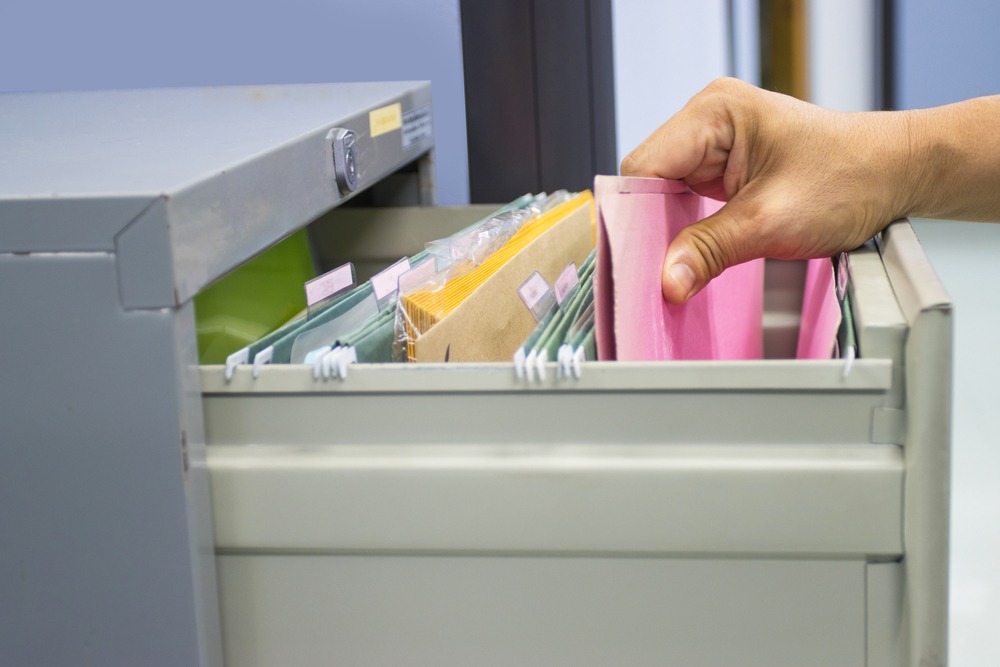
A hand searching through a file cabinet
Digital IDs not only reduce paperwork, but are more secure and private than paper files

If successful, the UK digital ID could bring enormous efficiency to public services. It would also be very useful for overseas residents like me, who still have to deal with the UK tax and other systems online. 

Yet unless the proposal builds public confidence by learning from Estonia’s transparency and citizen oversight, it risks being seen as surveillance, not empowerment. 

Digital IDs and freedom

Many civil liberties groups and sections of the public view digital IDs as a step toward mass surveillance and increased state control, fearing a “digital permit required to live” in everyday society.

The prospect of biometric tracking and centralised government databases worries those wary of privacy erosion. The proposal to issue digital IDs to children as young as 13 has been seen as "sinister" and "unjustified" by advocates, raising ethical and consent questions about early biometric enrolment. 

A father shows his daughter how digital ID works on a laptop
Digital IDs have been a secure part of Estonian life for 20 years / Photo: Rasmus Jurkatam

The government’s contextualising of the proposals as somehow mitigating illegal immigration has added further fuel to the fire. There is a petition to parliament opposing the idea, which has so far attracted nearly three million signatures (thus requiring a Westminster debate in response). Meanwhile, speculation grows about the allocation of contracts for actually creating and delivering the service, even before the pilot phase.

A recent BBC news programme about the planned scheme was very light on security and technical detail. Still, it featured pensioners saying how they had been glad not to carry any ID in the UK since the Second World War. A younger member of a right-leaning think tank was featured, stating that the Estonian system sounded like a dystopian nightmare! 

However hilariously misinformed this commentary may be, it’s evidence that the subject has become completely polarised politically in the UK. And it is receiving this attention way ahead of any potential introduction, likely to be 2029 at the earliest.

Comparing approaches to digital ID

As a British migrant and Estonian e-⁠resident living in Spain, I have long been used to feeling that my identity has at least three national facets. It goes with the territory of a location-independent career that lets me choose to operate my business in the digital climate of Estonia, while operating my life in the Mediterranean climate!

So here is my attempt to summarise the features and approaches to the various credentials that I carry – physically, digitally, and emotionally – with me in the world:

Estonia’s model stands out for both its wide use cases and the way it was built in from the start, rather than retrofitted to legacy statutory systems, as must inevitably be the way it goes in older nations.

Digital identity in Estonia is viewed as a public right, not a surveillance tool. Citizens own their data and can monitor who accesses it. This openness is key to trust. 

The operating principle that you only ever have to tell the government a piece of information once is also mind-blowing for this Spanish resident to contemplate! 

Earlier this year, after a minor traffic accident, I recall sitting in a hospital emergency waiting room, with a suspected concussion and high levels of pain.

I was working my way through at least six different paper forms before my treatment was finalised: the regional health service database is quite separate from the government ID, the police record was somewhere else and printed out about 20 pages long, and none of these integrated with the insurance companies in any way… So I was copying the same numbers and information from one form to another, in shaky handwriting.

There’s a lot of work still to do.

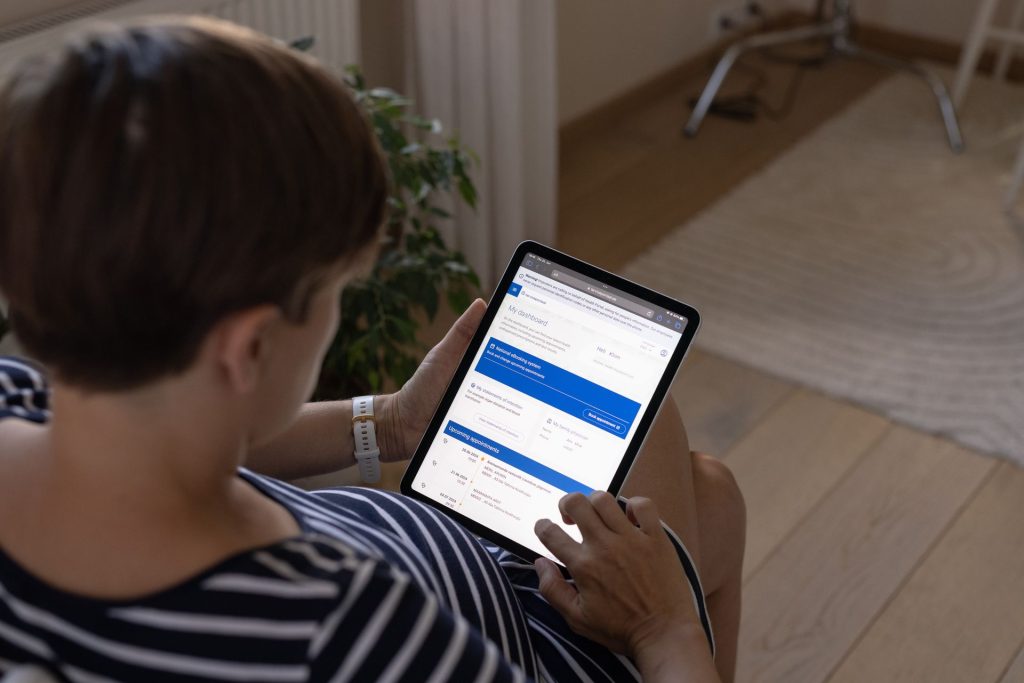
A person reviewing their health records online with an Estonian digital ID
Accessing health records online is one of many things Estonian residents can do with digital IDs

Hopefully Spain’s MiDNI will ultimately be more than a digital facelift for traditional ID card-based systems, while the UK digital ID approach seeks modernisation amid political caution. 

Both could learn so much from Estonia’s early decision to treat privacy as a design feature, not an afterthought, and create systems that truly put the user and their needs at the heart of it. 

For e-⁠residents like me, that trust is tangible. I can sign legally binding contracts from my laptop in Valencia, and the same digital signature is recognised across the EU. It feels liberating to run a company without waiting in line for paper stamps. 

Now that I am probably going to have to form a Spanish limited company to operate my business, the Remote Resilience Hub. I am painfully reminded of the extra direct costs involved too, with the notary visits and monthly administration demands this will create. None of this exists in Estonia.

Looking ahead to a digitally enabled future

Digital IDs are reshaping how we interact with governments and businesses. But they succeed only when citizens believe they’re built for them, not about them.

As Adam concluded, “Once people start using digital ID, they see how much more freedom and security it brings. It’s not about giving data away, it’s about taking it back.”

For those of us living across borders, it goes beyond theory to involve everyday reality. Just as with the remote work frameworks I create and train in, we have the technology to do this already – everything we need exists to be deployed.

All we need is for the social acceptance and regulatory frameworks to catch up. 

That’s why the UK, Spain, and many other nations need to learn more from Estonia’s excellent example. Through e-⁠Residency, anyone can experience Estonia’s digital ID system for themselves – securing, signing, and building a business online, wherever they live. It’s a model of digital trust that others, including the UK and Spain, can get inspired by.

Apply for e-⁠Residency

More from e-Residency