


business startup advice from pipedrive’s martin henk
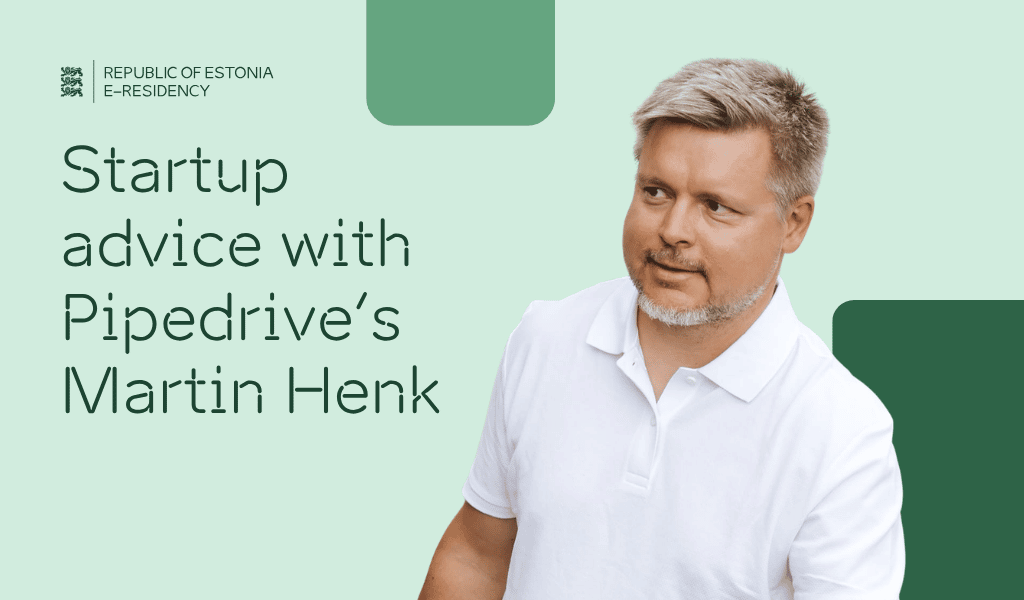
Estonia is one of the top countries for unicorns, or private businesses that are valued at north of $1 billion, which is why it continues to attract new e-residents from all over the world. But behind those tales of a Nordic Silicon Valley and startup glory are mild-mannered entrepreneurs like Martin Henk, who failed and failed again before starting something truly extraordinary.
Henk cofounded the customer relationship management platform Pipedrive in 2010 at a time when the ecosystem really started to take off, after a stint in the media and telecommunications worlds and a few failed startups under his belt. A decade after its founding, Pipedrive achieved unicorn status, giving Henk significant insights about founding and scaling an Estonian startup.
After serving as CTO and later Head of Product at Pipedrive, Henk went on to found Eventornado, which offers software for online hackathons, and to foster new startups as an angel investor. These days, he can be found tinkering with carpentry and blacksmithing tools or just relaxing with his family. What is his business startup advice for founders and e-residents? He has plenty of it! Estonian e-Residency recently sat down with the Pipedrive founder to gain more insight.
How did you get started as an entrepreneur?
I was building things from an early age, out of necessity, mostly. When I was growing up, we didn't have much. It was a difficult time for everybody. But I was really into computers. One way to get a computer was to build websites, sell them, and use that money to buy a better computer. I just kept going once I learned to build these systems. I branched out, making websites at first, then I started making business tools backends for companies. It was always about combining the love of computers and programming and trying to find a practical outlet for it.
I tried working for bigger companies as well. That is how I met my fellow Pipedrive cofounder Ragnar Sass at an Estonian daily newspaper. I was in sales, but I was very bad at it. I was lucky Ragnar didn't fire me, but transferred me into a technical role. I didn't last long at the paper. I tried to work at a telco, but it only lasted a year. Working at big companies is not for me.
The first company I founded was a website with friends from college. In 2004, we made a website for booking beauty salons and group trainings. It became a zombie startup; it's still around, and the website looks exactly as it did and still has 20 customers. The second proper startup was United Dogs and Cats. That failed with a big bang. In between, there have been projects that didn't properly become companies that also failed. Most of them kind of fizzled out.
What's more important for startup founders, having a good business idea or entrepreneurial mindset?
I've never been the idea guy; I have been the get shit done guy. That's why there's been no pattern. I had a booking website, a pet website, and a sales tool. None of these were my ideas and I haven't tried my own ideas. There are many different kinds of entrepreneurs. Some have a deep desire to bring something specific into the world. Getting things done in a small team, having an impact, and moving fast have been more important to me. Maybe one day I will find an idea.
Many e-residents are looking for cofounders. Someone like you who can make things happen. Do you have any business advice for them on how to build strong networks?
In general, hackathons are a really good place to find cofounders. There are so many of them happening all over the world. Go there. Pitch your idea. Try to find like-minded people. A lot of Estonian startups have started out that way. You can find people who are eager and have come to a place to do something new. If you just start hunting for a friend who works at a big company, who isn't that interested in doing something new on the side, it probably won't work as well.
How did you find startup cofounders and investors who you wanted to work with?
Finding cofounders for me was random. I realised I worked well with Ragnar at the newspaper. The others were by chance, but I also vibed well with them and thought we were complementary. Investors are harder. They need to check many boxes. Obviously, they need to be willing to give you a lot of money and understand your business model. We had so many investors who were big, famous, and willing to give us money, but they wanted to turn Pipedrive into an enterprise tool, which none of us wanted to do, because the product was made for small businesses.
With many investors, we couldn't get past the business model discrepancy. You also need the people to be good humans. Unfortunately, there are so many investors who are simply not nice people. We had to pass on many. This made the process so much longer and harder. We were determined to find great investors or not need them. We endured periods of dwindling resources to include the best investors. And we succeeded at Pipedrive with top-notch investors.
You also need top-notch employees. Why is hiring for cultural fit so important?
If you find inexperienced people who are smart, eager to learn, willing to take feedback, and internally driven, then they will figure things out and grow into the role. We had so many young people without the relevant experience, but who quickly became exceptionally valuable. Compared to hiring someone with the credentials and experience but who was an asshole, we always picked the inexperienced people who had the right mindset. We were obsessed with hiring. The hiring process became harder and harder over the years. Candidates needed to get through a long list of interviews and homework assignments. But I think it was totally worth it.
Many of those employees have stuck around.
It's strange now seeing people post online about their 10th or 11th anniversaries at Pipedrive. Because they have now worked at Pipedrive longer than I did.
E-residents from around the world are drawn to the Estonian ecosystem because it allows them to run their businesses remotely and with minimal bureaucracy. Did you see the same benefits as an Estonian entrepreneur?
The huge efficiency gain was really important. In any other country, getting a business legally started is a pain in the ass with a lot of paperwork. Most people would prefer to deal with their product rather than legal paperwork. Opening a bank account is so much faster and easier in Estonia. You can focus more on what makes your beer taste better than dealing with paperwork. Learning from the Estonian mentality of getting things done and cutting out most of the fluff is also beneficial.
What would you have done differently in your entrepreneurial journey if you could redo it?
I should have taken much better care of my body; that was a big failure. Also, understanding cultural differences better between Estonians and Americans would have been good. I always approached situations in a selfish way. From my point of view, being an Estonian, writing short emails, not respecting authority and social norms that other cultures take seriously, was stupid. I realised it way too late in the process. You should understand that even though you don't think a social norm is important, it doesn't mean others don’t value them. Understand that you will look like an imbecile.
We constantly had issues between senior US people and people in Estonia. An American tried to make a change in a polite way with a suggestion. The Estonians said "yup" and dismissed it, because they thought it was a soft suggestion. The American became frustrated, and the signal got lost. Estonians are direct, blunt, and offend other people by accident. For us, being efficient is normal. I should have taken intercultural classes or mentored people more proactively. For us, we noticed these differences and thought they were funny, but it was a bigger problem and we didn't do enough to fix them. For me personally, that messed up so many things within Pipedrive.
The Portuguese had a better fit with the Americans, who were used to structure and hierarchy.
What's a life hack you recommend to other startup founders?
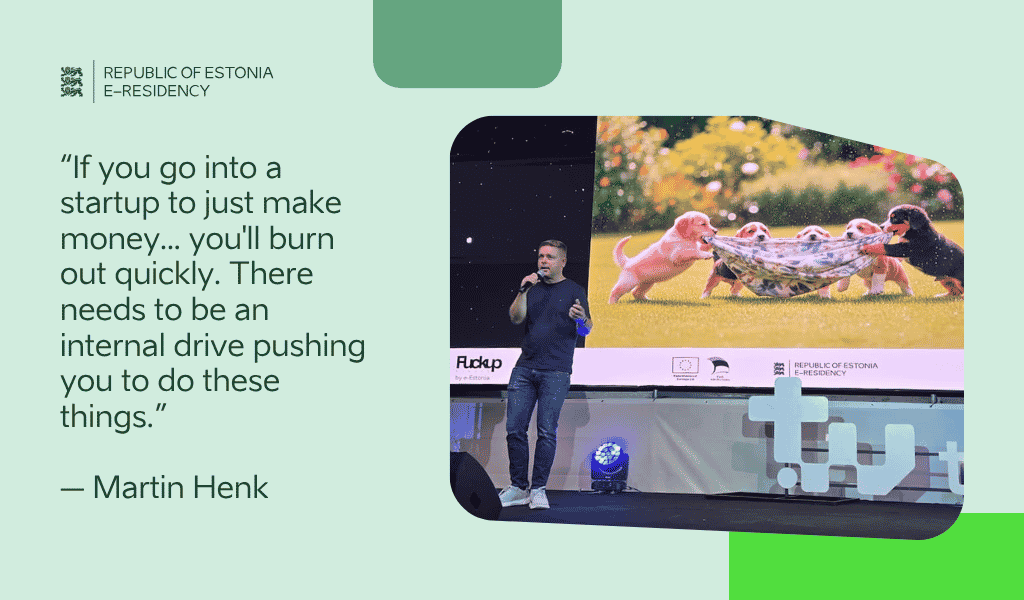
You need to take care of the thing you're building. If you go into a startup to just make money, if that's your only motivation, you'll burn out quickly. There needs to be an internal drive pushing you to do these things. Elon Musk has said building a company is like eating glass, so you need to have a good reason. Otherwise, it's better to work in a big company.
How did it relate to different startups you worked on?
I found my purpose in each of my startups, by making people less lonely by bonding over pets, or helping salespeople. Sales is so difficult. If we can make their lives slightly better, it felt good. Most businesses live or die by the success of their sales. My projects were different, but I always found something to make them worthwhile.
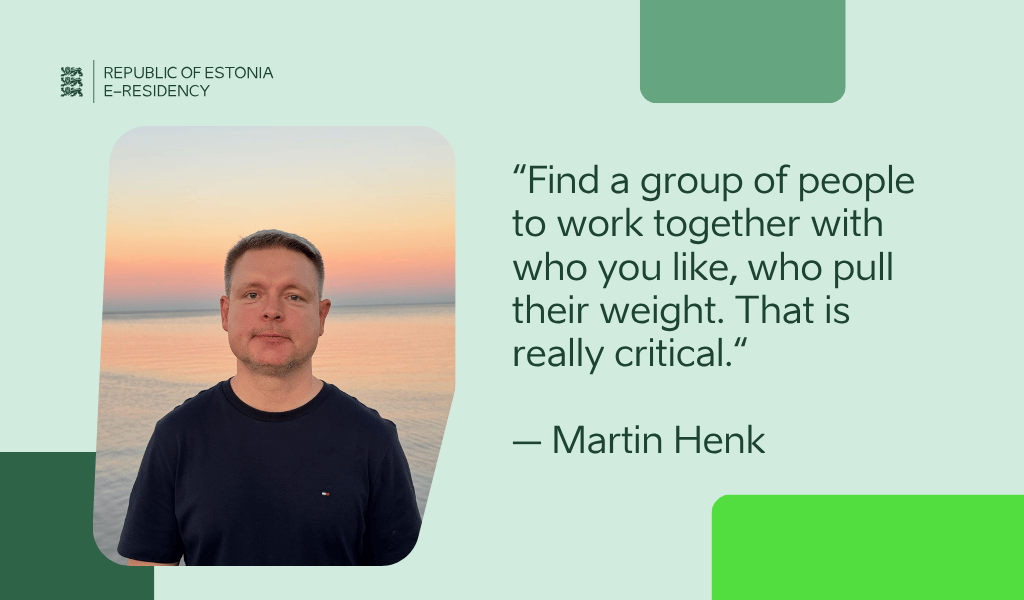
Find a group of people to work together with who you like, who pull their weight. That is really critical. Most startups fail because they implode and founders end up trying to kill each other. It's really important to find that group that you are able to go through all of these things together.
You also recommend hackathons as a way of getting things done. And the sauna.
During the early days at Pipedrive, some of us didn't have salaries yet, because it wasn't making any money. The best way to move the product forward was to gather everyone at a house in the woods and lock ourselves in for 48 hours and make massive progress. The ones who could code coded, marketers marketed. Every time we got together it was huge.
Pipedrive mostly worked because we went to the sauna a lot. It helped keep the group from killing each other. These were intense periods of working really hard and venting frustrations in the sauna. It's beneficial for building the product and company and for everything. I'm a really big fan. I've done this at every startup.
As Pipedrive grew bigger, we kept doing these. It's great up to a point, but when the company gets big enough, you need to stop. The quality of code produced during a hackathon can be pretty iffy. In the beginning, it's valuable to get things done and into the hands of customers and moving fast. But at a certain point, you need to slow down and worry more about quality.
How did you maintain a work-life balance as an entrepreneur or startup founder?
Pipedrive was a strange company because we all had families by the time we started it. We all had kids and were a bit older. We had a much more balanced approach. We had intense periods, hackathons where you had to pull yourself together and go to the accelerator in San Francisco. But we understood it was more about measuring the outputs than the inputs. There's a lot of grind mentality, that putting more hours in and not sleeping is the only way to succeed. But if you're so tired that you become stupid and make mistakes, it's not efficient. It’s not only about work-life balance, but sleep is important, taking care of yourself.
That’s one of the things I found out too late. Managing stress, I should have taken better care of myself. I should have gone to the gym instead of watching Netflix and drinking wine. It made a huge difference. I could have handled the stress of building this big thing if I had taken better care of my body. There are moments where you need to give everything. You can give up sleep or family for a short time, but in the long term it doesn’t scale. It will have the opposite effect if you go too long, unless you are Elon Musk, but there is only one Elon. Everyone else is human.
What is life like after founding a unicorn? What drives you now?
I'm an investor in a number of companies, but am not actively investing. I help out portfolio companies when needed. I'm not actively engaged in the ecosystem. I don't know most of the new ones, I rarely go to any events with some exceptions. I'm mostly focused on family, my health and my hobbies. That's my life right now.
One final question. Do you have any book recommendations for founders and e-residents?
I have many. One of the best things I did at Pipedrive was founding a book club with a channel on Slack. Three that I always recommend are:
- The Hard Thing About Hard Things by Ben Horowitz. This is a book about how hard startup stories can be. Pipedrive was super lucky; we never went through things that bad.
- For one about personal responsibility, I recommend Extreme Ownership: How U.S. Navy SEALs Lead and Win by Jocko Willink and Leif Babin.
- And a third book I recommend is Crucial Conversations: Tools for Talking When Stakes are High. This has been helpful in general on how to talk about things with people instead of hoping problems will resolve on their own. It's useful in a company setting and in my personal life too.
The gorilla vs the alligator
While some years have passed since Henk left Pipedrive, the experience of founding and scaling the company has remained. The knowledge he acquired is certainly of interest to all entrepreneurs, e-residents included. One question he often posed to aspiring employees during the hiring process was, "If there was an alligator and a gorilla in the room, who would win in a fight?"
According to Henk, this was never a trick question. And, no, there was no correct answer either. Instead, the question was used to determine who was a quick thinker, a valuable ability to have.
"In a startup environment, you need to make quick decisions with incomplete data," Henk says. "You have situations where you need to make a decision and move forward instead of being stuck in analysis paralysis." Those who froze up, he says, didn't get the job. But those who responded quickly – be it alligator, or gorilla – were often selected to join the Pipedrive team.
Want to become a part of Estonia's fast-thinking, quick-moving startup sector? Learn more about the e-Residency programme and how to set up your own Estonian company online.
Make business easy with e-Residency
More from e-Residency
- Sign up for our newsletter
- Watch fresh video content - subscribe to our Youtube channel
- Meet our team and e-residents - register for our next Live Q&A