
women in entrepreneurship: it’s time to close the gap
Around the world, women start fewer businesses than men. That is not because they lack ambition, ideas or drive. It is because the system wasn’t built with them in mind. This series sets out to change this.
The numbers tell a clear story
Women make up half the world’s population, but they are far less likely to start a business than their male counterparts. According to the Global Entrepreneurship Monitor (GEM) 2024/2025 Women’s Entrepreneurship Report, which draws on insights from over 161,000 adults across 51 countries, only one in ten women started a new business in 2024 compared to one in eight men.
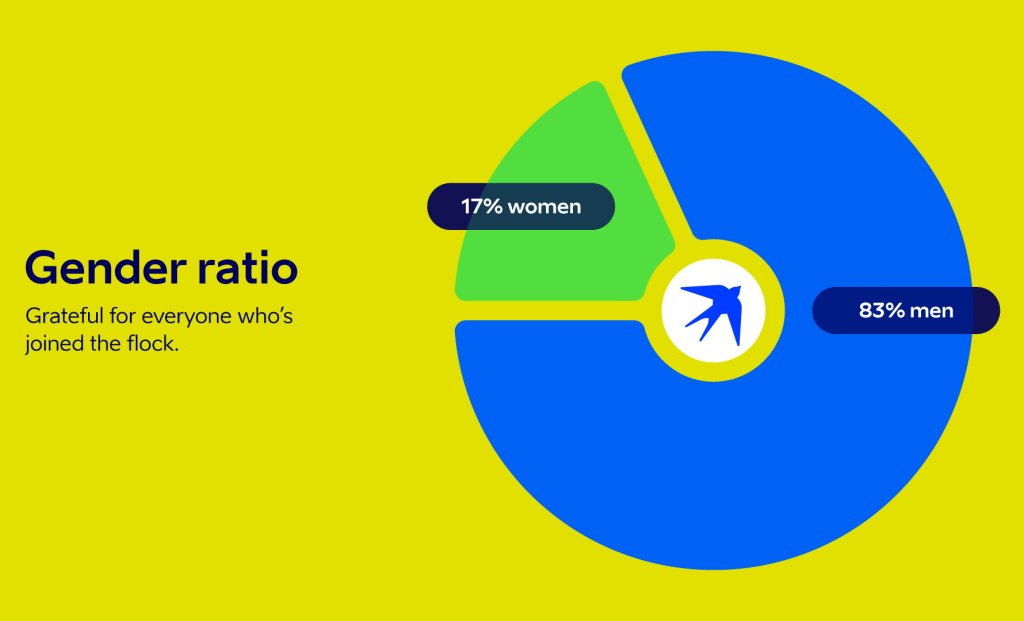
At e-Residency, only around 17% of e-residents are women. That means roughly five out of every six people using our programme to build a borderless business are men. The reasons for this gap are complex and systemic. Women face unique barriers, from limited access to funding and networks to unpaid caregiving responsibilities and societal biases. These are not just personal hurdles. They represent missed opportunities for economies and communities worldwide.
Research shows that closing the gender gap in entrepreneurship could boost global GDP by up to 20%, creating jobs, fostering innovation, and driving sustainable development. That is not just a win for women. It is a win for everyone. We unpacked the 2025 gender data in detail in our 11th anniversary review.
At e-Residency, we believe that everyone should have the chance to build a business on their own terms, and we are not willing to accept this gap. That is why we are launching the Women in Entrepreneurship series. This collection of articles, interviews and resources is designed to inspire, inform and empower more women to explore entrepreneurship and use tools like e-Residency to grow their businesses across borders.
Key statistics at a glance
Women who started a business in 2024
Female e-residents in 2025
Women more likely to close a business for family reasons
Informal investment going to men
1 in 10 (vs 1 in 8 men)
17%
47% more likely than men
Two-thirds globally
Women who started a business in 2024
1 in 10 (vs 1 in 8 men)
Female e-residents in 2025
17%
Women more likely to close a business for family reasons
47% more likely than men
Informal investment going to men
Two-thirds globally
See what people answered to the question "Why are there fewer women entrepreneurs?":
Please to watch this video.
Why fewer women become entrepreneurs
Women do not lack entrepreneurial spirit. They face a system that, in many ways, still works against them.
The GEM report highlights that women are 47% more likely than men to close a business for family or personal reasons. Caregiving responsibilities, whether for children, ageing parents, or both, still fall disproportionately on women’s shoulders. When those responsibilities conflict with the demands of running a business, women are often the ones who step back.
Access to finance is another persistent challenge. Women were 2.5 times more likely to invest in other women than men investors, yet two-thirds of all informal investment globally still flows to male entrepreneurs. Without access to funding, early-stage businesses struggle to gain traction.
In some countries, women face restrictions on opening bank accounts, signing contracts, or registering a business without a male co-signatory. Even in countries where no such laws exist, unconscious bias in banking, legal systems and investor communities can make the process harder for women at every step.
There is also the issue of confidence and visibility. When women do not see people like them in entrepreneurial spaces, it is harder to picture themselves there. Role models matter. As Liina Vahtras, managing director of e-Residency and a prominent voice for women in tech, puts it:

Liina Vahtras, Managing Director of e-Residency“We are wired to compare ourselves to others, and visible examples have real power. When someone sees a woman leading in tech or digital government, the reaction is often simple: ‘If she can do it, so can I.’ Representation reduces psychological distance.”
Why the world needs more women entrepreneurs
It is not just a question of fairness, though fairness alone is reason enough. When half the population is held back from reaching its full economic potential, everyone loses.
The business case is clear and growing stronger. Research consistently shows that companies with women in leadership roles outperform those without.
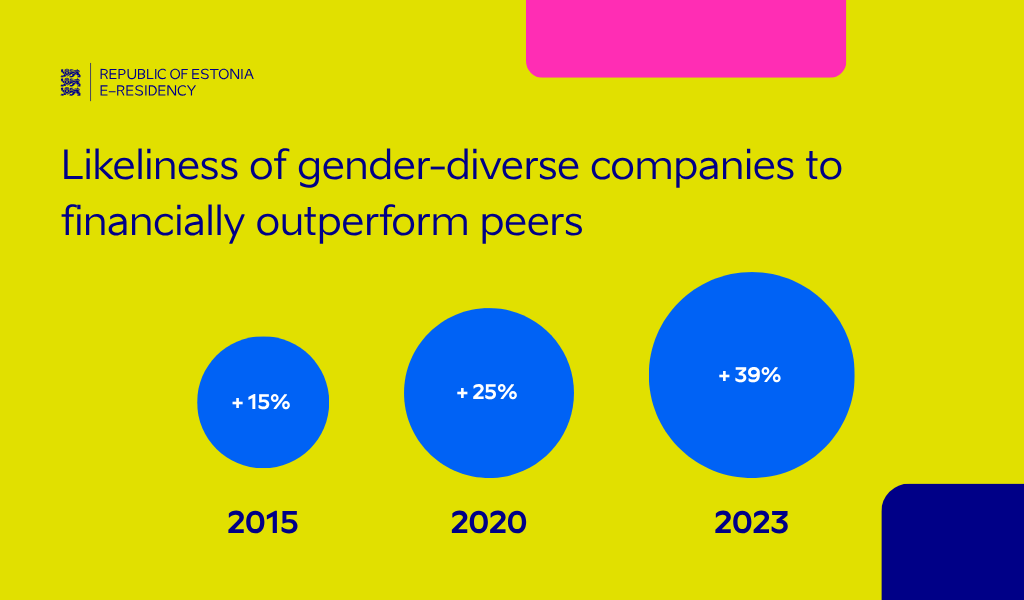
- In 2015, gender-diverse companies were 15% more likely to outperform their non-diverse counterparts.
- That advantage has only grown over time: McKinsey's 2023 Diversity Matters Even More report found that companies with top-quartile gender-diverse executive teams are 21% more likely to outperform on profitability.
- By 2023, that figure had risen to 39%, showcasing that having more women in leadership positions drives real financial gains, resilience and business success.
- According to the Women on Boards and Beyond 2024 Progress report, companies with 30% or more female directors on their boards saw almost 19% higher cumulative returns compared to those with fewer female directors.
- The benefits go beyond financial performance. Companies with above-average gender diversity among owners are 21.4% more likely to innovate than those with less diversity.
People with different backgrounds and lived experiences approach problems differently. That variety of perspective makes teams more innovative and better equipped to adapt in fast-moving markets.
Women entrepreneurs also tend to hire more women, creating a virtuous cycle of inclusion. And businesses built around women’s lived experience often serve markets and solve problems that male-dominated industries overlook entirely. As the World Bank puts it, entrepreneurship becomes an important vehicle for women’s empowerment, offering financial independence and an additional source of household income for families.
The untapped potential is significant. Removing these barriers is not just the right thing to do. It is one of the smartest economic investments a society can make. As Aileen Ionescu-Somers, GEM Executive Director, puts it: “We must invest in women-focused entrepreneurship ecosystems, strengthen their capabilities and confidence, and move beyond one-size-fits-all approaches that ignore local realities.”
How e-Residency can help women entrepreneurs
Since 2014, e-Residency has given entrepreneurs around the world a way to start and run a trusted EU company entirely online, without needing to relocate. We have long believed in the particular opportunity this creates for women, and this article on how e-Residency can empower women entrepreneurs explores that case in depth. For women facing structural barriers at home, e-Residency offers a different path.
Location independence
You can run your business from wherever you are. Whether you are balancing caregiving responsibilities, living somewhere with limited local opportunities, or simply wanting the freedom to work on your own terms, e-Residency removes the need to be physically present in Estonia.
Low start-up costs and financial risk
Applying for e-Residency costs just €150. Estonia’s business environment offers 0% corporate income tax on reinvested profits, meaning you can test an idea and grow it gradually without a large upfront financial commitment.
Access to EU markets and clients
An Estonian company gives you access to the entire European single market, making it easier to work with clients across borders, sign contracts and receive international payments through trusted banking and payment platforms.
Flexibility around your life
E-Residency enables a flexible, self-directed career. For women who have stepped back from employment to care for family, or who are returning to work after a career break, it offers a way to build something entirely on their own terms.
Ready to take the next step? Our guide about the top skills of an entrepreneur is a good place to start.
Introducing the Women in Entrepreneurship series
We believe that more women should feel empowered to explore entrepreneurship, and that e-Residency can be a real part of making that happen.
This article just marks the beginning. We are launching a dedicated series on the e-Residency blog focused entirely on women in entrepreneurship: what the barriers look like in practice, what breaking through them feels like, and what is possible on the other side.
In the coming articles, you will hear directly from women e-resident entrepreneurs who have built businesses across borders, navigated the challenges, and found their own paths forward. You will also find practical guidance, research, and inspiration to help you take the next step, whatever that looks like for you.
Subscribe to the e-Residency newsletter below to hear about the next articles in this series, including guest posts and interviews with inspiring women e-resident entrepreneurs. And follow us on social media for updates.
Curious about e-Residency?
FAQs
What is Estonian e-Residency?
Estonia has offered e-Residency since 2014, making it the first country in the world to do so. It is a government-issued digital identity, giving global entrepreneurs (called e-residents) access to the country's advanced digital infrastructure. It allows entrepreneurs anywhere in the world to start and run an EU company entirely online, without needing to relocate to Estonia. You can find out more about how e-Residency works on our website.
How can e-Residency help women entrepreneurs specifically?
E-Residency removes many of the practical barriers that make entrepreneurship harder for women. It is location-independent, meaning you can run your business from wherever you are. With low start-up costs and 0% corporate income tax on reinvested profits, it reduces financial risk. It also gives you access to EU markets and clients, regardless of your location. And, an Estonian company is treated the same regardless of your gender, background, or nationality.
What is the Women in Entrepreneurship series?
It is a dedicated series of articles, interviews, and resources on the e-Residency blog focused entirely on women in entrepreneurship. The series explores the barriers women face, shares stories from women e-resident entrepreneurs who have built businesses across borders, and offers practical guidance for women who want to explore entrepreneurship on their own terms.
More from e-Residency
- Sign up for our newsletter
- Watch fresh video content - subscribe to our Youtube channel
- Meet our team and e-residents - register for our next Live Q&A