
how e-Residency helped striga grow and get acquired
From remote incorporation to a US acquisition, Striga’s story started with e-Residency. Founder Prashanth Balasubramanian explains why Estonia became its home.

Estonian e-resident Prashanth Balasubramanian is from Bangalore in India. It's the South Asian country's third-largest city and a tech boomtown. At first glance, it would seem like the ideal spot from which to launch a fintech. But in the case of Prashanth and Striga, the financial services infrastructure provider he built and scaled from its base in Estonia, first looks can be deceiving.
"When I was working with a startup in Switzerland, I was exposed firsthand to how European laws and regulations work, and the things you need to build a payment startup here," he says.
At that time, India's rules and regulations around anything related to cryptocurrency were, in Prashanth's words, either a "complete mess," "nightmare" or both. Prashanth saw Europe instead as the ideal, the place where he could build a new fintech in a controlled environment.
But where to get started in Europe? At first, the UK topped the list, but it lost some of its shine thanks to Brexit. Estonia and its e-Residency programme, which allows entrepreneurs to build and manage a European company from anywhere, rose to the top. Prashanth established Striga Technology in Tallinn in 2021 after completing the Y Combinator programme. He also obtained a Startup Visa, which allows non-EU founders to relocate to Estonia, and he hasn't looked back.
"Everything is digital here," says Prashanth, who has lived in Estonia for nearly five years now. "And that's a good thing for someone like me who is building a company and not from Europe."
A virtual asset service provider
Striga is a business-to-business infrastructure provider that provides its clients with the tools needed to embed banking and cryptocurrency services into their own products, using a single application programming interface (API).
The company has also since 2022 held a Virtual Asset Service Provider (VASP) licence and was recently the first company licensed under Estonia's updated crypto regulatory framework (MiCA). It is currently active in 60 markets globally.
The team remains lean, totalling 15. Its office recently became the European headquarters of its parent Lightspark, a West Hollywood, California-based company, which acquired Striga in a private deal last year. Striga has since done business as Lightspark Payments Europe.
Its mission, Prashanth stresses, is unchanged: to offer clients the ability to build their apps with its payment infrastructure for digital currencies and to remake the global financial landscape. Some customers take a more do-it-yourself approach, others need more help along the way.
"I am obsessed with making sure our customers have the best possible experience," he says.
From Bangalore to Bitcoin
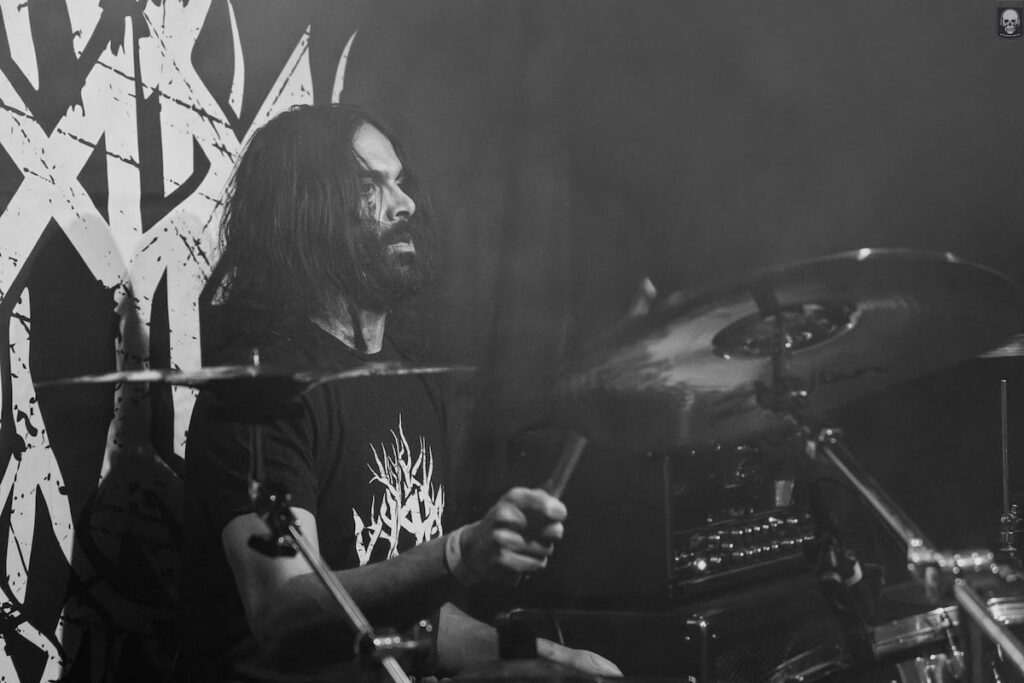
The idea for Striga emerged from Prashanth's experiences as an international student at ETH Zürich, where he had gone to study computer science. Prashanth was also working as a musician during his studies on the side. A metalhead since his teens, and heavily influenced by Northern European bands, Prashanth found himself playing drums around Switzerland and Germany and frustrated by the difficulties he faced in making multi-currency payments.
"Touring as a drummer allowed me to experience, painfully, how fragmented the payment infrastructure is between crypto and fiat currencies (like euros and Swiss francs)," he says.
At that time, Bitcoin was just beginning to emerge as a digital currency. Prashanth first got curious from a software perspective and he began to toy with the open source code at the same time that he took on a role in a local Swiss fintech. Eventually he became the startup's head of IT too. So his interest in Bitcoin was both professional and personal. He was interested in digital currencies from a technical perspective, and because they could help him solve his own issues.
"As an immigrant, I didn't have access to the banking system in Europe," he says. "To move money across borders, I bought and sold Bitcoin." Soon, he decided to start his own company. He decided to call it Striga, after a supernatural creature from the drama series The Witcher.
A digital nomad
Estonia entered the picture around the same time, but in an indirect way. An early investor in the firm that would become Striga was Buildit, based in Riga, Latvia, but it had an Estonian on its board. Prashanth spent months in Latvia, during which time he visited its northern neighbor.
During this period, he lived the life of the digital nomad – moving between different places. But all of this travelling only made him realise that Europe was the best place to build and scale.
At that moment, one could say that Estonia met Prashanth halfway. The country in 2020 began improving its licensing regime for virtual asset service providers (VASPs). Licence holders now needed to show a genuine connection to Estonia, meet higher capital requirements, keep management in the country, implement strong anti-money laundering and know-your-customer (KYC) procedures and submit to tighter supervision. All of which sounded good to Prashanth.
"Estonia's regulatory framework for digital assets was evolving in a way that promised long-term stability," he says. "The country's regulators appeared to be taking cryptocurrency seriously and building a clear, predictable legal environment, making it the strongest choice for our company."
In early 2021, Striga took part in the Y Combinator startup accelerator in Silicon Valley and closed an oversubscribed seed round totalling $3.1 million. Convinced that it was time to go back to Estonia, Prashanth and his team applied for Startup Visas. Once they were accepted, they made the move. It also happened to occur during the COVID-19 pandemic.
"It was exactly in the middle of that," he says. "As soon as we got visas, we took the flight out."
Building Striga in Estonia
Prashanth was already an Estonian e-resident, having obtained his card during one of his Baltic sojourns. He used e-Residency to finally incorporate Striga as an Estonian entity from India during the pandemic.
"I don't think the outcome or trajectory for the company would have happened without e-Residency," he says.
Getting the Startup Visa and setting up Striga was the easy part. Becoming a licensed service provider under Estonia's new regulations took longer. He praises regulators though with giving Striga time to comply, maintaining an open dialogue during the process, and being helpful.
"There was nothing that was a surprise or a last-minute thing," he says. "We had plenty of time."
Striga eventually obtained a licence, becoming the first company to do so under the new regulations, and launched commercially in January 2023. By 2024 it was profitable. Under the EU's Markets in Crypto-Assets (MiCA) framework, the company is now able to offer its services licenced in Estonia across the European Economic Area, which includes the 27 EU Member States as well as Norway, Iceland, and Liechtenstein.
Such expansion, Prashanth believes, would not have been possible without these regulations. To date, Lightspark remains the only Estonian company authorised to offer both crypto asset and euro-denominated financial services under the MiCA framework. He credits Estonia with the company's rapid growth and later acquisition.
"Nothing is ever perfect," Prashanth says, "but in hindsight it was absolutely the best choice."

Living in Estonia
Relocation is never easy, but in the case of moving to Estonia, Prashanth remained so dedicated to Striga that he forgot to get homesick. Striga came first, even though it meant putting up with the Estonian weather and its notoriously long winters.
While being from Bangalore, a tropical city where it has never snowed ever, Prashanth coped.
Besides, he liked the place. It was orderly, compact, not noisy, not too crowded. "The people are polite," says Prashanth. "And I absolutely love the digital bits of it."
Busy with Striga, Prashanth didn't immerse himself in the startup community, but since the acquisition, he's more inclined to. Prashanth has joined the Estonian Founders Society and is doing more networking. "Maybe I can share something that helps the next person build a company," he says. Prashanth is still playing the drums, by the way, in an Estonian group called Vimm.
Lightspark Payments Europe
The Lightspark acquisition happened in October but according to Prashanth, it seemed pre-destined. Lightspark had been building solutions that aligned with Striga's on the Bitcoin Lightning Network and the two companies were discussing a possible integration for years.
Striga had also reached the point where it was ready to pursue another round of financing, while Lightspark was looking to enter the European market. Striga's profitability also put it in a better position to negotiate a combination.
"It made sense to join forces," Prashanth says. But what will it mean for the company going forward? According to Prashanth, it will continue to innovate and won't be leaving Estonia either.
Although now part of Lightspark, Lightspark Payments Europe remains an independent regulated entity in Europe, where it must make its own regulatory decisions. The acquisition has given the company access to significantly greater resources, allowing the team to focus on long-term growth. It has also expanded Striga's global capabilities, including access to Lightspark's networks, enabling cross-border payments that were previously out of reach.

A massive space
Prashanth believes that the global financial system is undergoing a transition period and that as a combined entity, Lightspark and Striga are poised to change it. Entrenched players and methods, which he calls "the legacy financial system" are giving way to more efficient solutions.
"There are so many inefficiencies in payments," he says. "It's a massive problem to solve and there are many big companies doing it." Because of the scope of the issue, Prashanth believes there is room for competitors, including Lightspark, to emerge on the scene and offer new ideas.
"It's a massive, massive space," he says. The company's own plans are to continue to grow. That will require new licences in new markets and "winning the payments game" in the long term. The company is also hiring new staffers – in programming, compliance, and customer service – and is planning new features, adding new currencies and product improvements.
Striga's focus remains Europe, including the UK. While holding first-party licences in Europe and the US, Striga is eyeing expansion opportunities in some Asian and Latin American markets.
"These are the underbanked and underserved markets, so those are places where we see a huge economic opportunity for us," says Prashanth.
Getting there might still take some time, he admits, but he remains, after all of these years, focused on achieving what he set out to do.
"What I've learned is that this is not one of those things that you do overnight or in two or three years," he says. "It's a slow process of building until you see that curve. We are getting closer."
Ready to become an e-resident?

More from e-Residency
- Sign up for our newsletter
- Watch fresh video content - subscribe to our Youtube channel
- Meet our team and e-residents - register for our next Live Q&A
Share this article:
Read next

How to invest in startups: Lessons from two business angels

Swiss researcher discovers creative use cases for e-Residency

How software startup Usetiful scaled to a multi-million acquisition with e-Residency

Fuckup Nights’ founder Pepe Villatoro: e-Residency democratizes entrepreneurship