

sustainable social impact startups: ideas and trends for purpose-driven entrepreneurs
An overview of sustainability trends, with examples of social impact startups from Estonia, including some founded by e-residents

Around the world, startups are embracing the opportunity to create social good by incorporating sustainability and social impact in the design and production of their products and throughout their operations. These sustainable and social impact startups are prioritising purpose over profit, while reaping the benefits of pioneering a sustainable future. This includes reputational advantages, demand for their innovative solutions, and an increased ability to attract investment and funding.
The rise in sustainable and social impact startups
The recently published report, The State of Social Enterprise 2024, provides the first comprehensive global data set that estimates the size and scope of social enterprises around the world. This report’s key findings include the fact that:
- there are 10 million social enterprises globally
- social enterprises generate about US$2 trillion in revenue annually
- social enterprises create around 200 million jobs across various sectors
- social enterprises require around US$1.1 trillion in external financing
- 50% of social enterprises are led by women
Countries like Estonia are actively involved in supporting and nurturing social enterprises from the startup phase, providing institutional support and funding, and creating a culture of entrepreneurship and innovation. According to an OECD report from 2020, the “start-up culture and the multiplicity of “bottom-up” initiatives has laid the ground for the ecosystem for social innovation to develop and flourish” in Estonia.
If you’re looking for sustainable social impact startup ideas, it can be helpful to look at some of the trends around the world to identify areas of opportunity. Below is an overview of these trends, with examples of social impact startups from Estonia.
Many startups choose to establish themselves in Estonia through the e-Residency program. That’s because of the many advantages, which include unlocking European startup funding, access to the EU marketplace, and the most competitive tax system in the world.
Below is an overview of eight sustainable and social impact trends around the world, which include circular economy business models, renewable energy startups, sustainable agriculture, green construction, climate technologies, sustainable mobility, and more.
These mission-led business and startup trends are illustrated with examples from Estonia, showcasing the breadth of social enterprise ingenuity and startup success from this Baltic nation and global startup hub.
1. Circular Economy Businesses
Circularity is a global megatrend based on the idea of minimising waste, maximising resource efficiency, and helping ensure we live within planetary boundaries.
Many startups have been embracing the circular economy, creating products and services based on reducing waste, reusing and recycling materials, repurposing and upcycling products, and restoring nature.
Circular economy startup examples from Estonia:
- Reverse Resources, which is based in Estonia, is a “SaaS platform to digitise, connect and scale global textile-to-textile recycling”. The company works with hundreds of manufacturers, recyclers and waste handlers in 34 countries.
- Woola, a certified BCorp based in Estonia, aims to cut fossil-fuel based bubble wrap in packing by replacing it with leftover sheep wool to protect products being shipped.
- KIUD Technologies (formerly Low imPACK) is an Estonian greentech startup business that repurposes industrial waste fibres and produces premium packaging that has a lower carbon footprint. In 2023, the business launched a novel packing rental system for eCommerce brands, which further drives sustainability and a more circular economy.
- Releaf, an Estonian e-resident company based in Ukraine, is an innovative startup business that turns biowastes like fallen leaves into sustainable paper. Releaf's eCommerce operations are run via its Estonian subsidiary, and it’s looking towards launching a production facility in the EU.
2. Renewable Energy Startups
The transition away from fossil fuels towards renewables is not only more sustainable, but it’s also increasingly becoming the most affordable form of energy.
There are many startups that are embracing this switch to cleaner energy sources, using innovation and new technologies to make renewables more efficient, accessible and affordable.
Renewable energy startup examples from Estonia:
- Skeleton Technologies is a company that exemplifies the success and innovation of Estonia’s startup ecosystem. Now one of the largest companies in Estonia, Skeleton Technologies manufactures high-power energy storage solutions that use a patented curved graphene-based supercapacitor and battery cells that can power IndyCars and anything requiring high-power energy.
- Gridio in Estonia is a smart car-charging app that automatically charges your car when electricity is the cheapest, and often when it’s the greenest too. In January 2025, the Tallinn-based startup raised €2.4 million in seed funding in a round led by Neoinvesteeringud, with Encevo, SmartCap, and Renergy joining. Already serving 30,000 users across Europe, Gridio plans to quadruple its user base next year. The new funding will support Gridio’s expansion across European markets.
3. Sustainable Agriculture Startups
Many innovative startups are revolutionising agriculture using innovation and technology to transform farming to be more sustainable, ethical and efficient.
This includes the use of vertical farming, the development of alternative proteins as fodder for livestock that reduce their greenhouse gas emissions, and technologies to reduce food waste in the transport of perishables.
Sustainable agriculture startup examples from Estonia:
- Click & Grow is a company that was started in Estonia to help people living in cities to easily grow plants at home, even without a garden. Their smart garden systems allow customers to grow herbs and plants indoors both quickly and easily, without using GMOs or pesticides.
- eAgronom was founded as a startup in 2016 in Estonia and now operates in Europe and Africa, working to provide financial benefits to over 3000 sustainable farmers while decarbonizing farming.
4. Sustainable Construction Startups
Green building and sustainable construction are popular trends around the world, incorporating smart technologies, environmental design, and resource efficiency.
Sustainable construction startups are developing innovative building materials that are better for the environment, designing technologies to create more sustainable homes and offices, and increasing energy efficiency in buildings amongst other things.
Sustainable construction startups in Estonia:
- Tallinn-based startup, Myceen, is revolutionising green construction by creating building materials made from mycelium (mushrooms), which are carbon-negative. The startup has attracted €2 million in funding to expand its production capabilities.
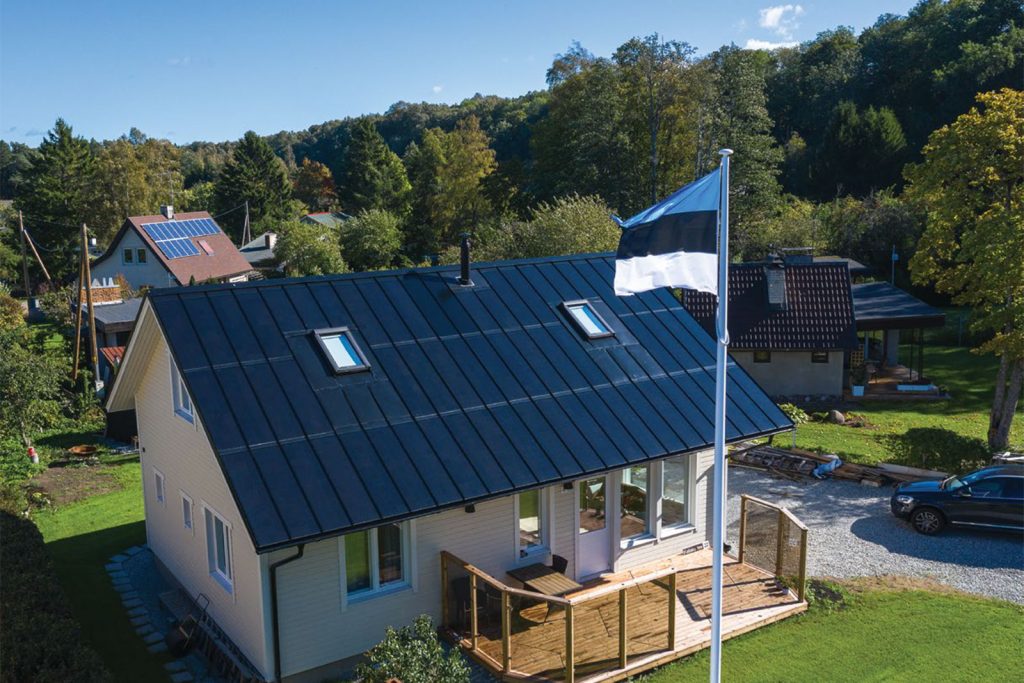
- Roofit.solar in Estonia manufactures innovative solar roof panels that are integrated into the roof design and can help homeowners produce 100% of their home’s energy (like in the below image). The company uses a Nordic design and premium materials to ensure the rooftop solar panels are optimally efficient. The company also provides a full installation service, as well as after-sales services.
5. Sustainable Fashion Startups
Many companies in the fashion industry are recognising the importance of having sustainable supply chains and benefits of being branded ethical and eco-friendly.
From large fashion brands like Patagonia that are committed to environmental sustainability, to fabric manufacturers that are using organic and recycled fabrics, and second-hand clothing marketplaces – there are many startups that are embracing sustainable fashion.
Sustainable fashion startups in Estonia:
- According to Reet Aus, a Tallin-based fashion startup, they embrace slow, sustainable and ethical fashion. They do this by using a unique UPMADE methodology when producing their clothes that saves vast amounts of water and energy during manufacturing and results in 80% less CO2 emissions.
- Smobya is a fashion biotech company registered in Estonia and all of its founders are Estonian e-residents. The startup uses bacteria to produce cellulose, a strong and sustainable material that is used to create faux leather material for the fashion industry. Thanks to e-Residency and having a company in Estonia, the team was able to access a research grant from Enterprise Estonia. This grant has helped them develop their product and attract further investment.
6. Climate Tech Startups
Climate tech startups are leveraging new technologies to mitigate climate change by reducing carbon emissions and enhancing climate resilience. This includes developing renewable technologies to create power from wind and solar, solutions that minimise carbon emissions, and products that make energy use more efficient.
Estonia is known as a GreenTech and CleanTech startup hub, with many startups offering solutions to decarbonize the economy. It even has a GreenTech Cluster, founded by the Science Park Tehnopol and Pakri Science and Industrial Park, which aims to accelerate green technology solutions.
Climate tech startups in Estonia:
- Sunly is a renewable energy company in Estonia that also invests in startups and sells power directly to consumers.
- UP Catalyst is a climate tech startup that produces sustainable carbon nanomaterials and graphite from carbon dioxide that’s produced as industrial waste, and has a carbon negative production process.
7. Education Startups
Digital technologies have helped to transform education, with many edtech startups providing solutions for equitable and sustainable access to quality education. From solar-powered classrooms to digital skills-training – there is vast opportunity for education-based startups.
Edtech startups in Estonia:
- Lingvist is a company providing an innovative language learning platform that uses AI to personalise education learning journeys. It’s a subscription-based solution that helps people learn languages faster, using algorithms to help place students into the correct learning levels.
8. Sustainable Mobility Startups
Transport emission contributes significantly to global carbon emissions. This makes sustainable mobility startups a priority for countries around the world. Creating more sustainable forms of transport that reduce carbon emissions can help make our cities healthier and cooler.
Sustainable mobility innovations include electric vehicle (EV) and bike-sharing platforms, EV infrastructure, and smart transit systems.
Sustainable transport startups in Estonia:
- Auve Tech builds autonomous shuttles for more flexible public transportation. Their new generation self-driving shuttle MiCa takes safety and self-driving to a new level, is already active on public roads, and allows autonomous driving in various weather and traffic conditions.
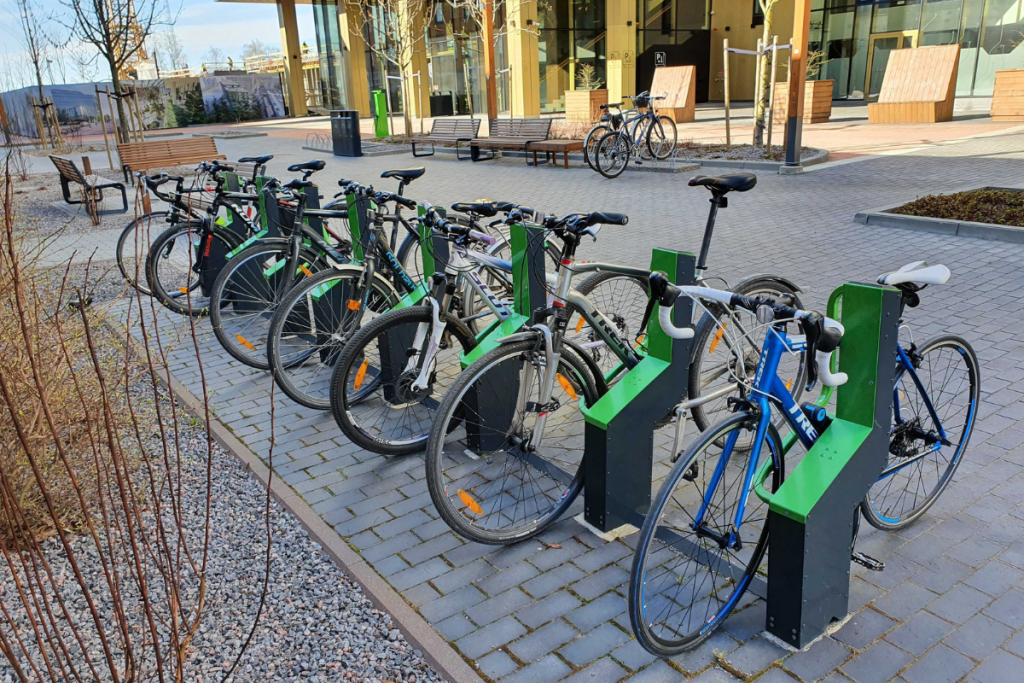
- Bikeep is a startup that provides a smart bike parking system (see image above) that promotes cycling as a sustainable form of transport. Their technology is used in over 21 countries.
- Elmo Rent provides an innovative electric car-sharing service that helps promote the use of electric vehicles.
Final Thoughts on Social Entrepreneurship Trends Globally (and in Estonia)
Social enterprises can drive positive change and unlock opportunities to grow economies, jobs, and support sustainable development. However, not every country provides the same level of support, enabling environments, and opportunities for entrepreneurs and startups. That is why many purpose-led businesses and startups choose to establish themselves in countries like Estonia.
The abundance and variety of social entrepreneur startups are creating a positive impact on our world. It’s exciting that people anywhere in the world can use digital connectivity and programs like Estonian e-Residency to establish their enterprises from the most startup-friendly locations.
This article was written by guest contributor and seasoned digital nomad Andy Stofferis (www.andysto.com).
More from e-Residency
- Sign up for our newsletter
- Watch fresh video content - subscribe to our Youtube channel
- Meet our team and e-residents - register for our next Live Q&A