how europe’s digital edge is driving UK business expansion

UK entrepreneurs are rethinking business expansion. Discover why Europe, and Estonia’s e-⁠Residency, offer smarter, digital-first growth.

Graphic with the text "How Europe’s digital edge is driving UK business expansion"

Europe’s startup scene is rich in talent and research, yet it faces fragmentation that can dilute its competitive edge, such as the UK breaking away recently. James Varga, cofounder of The Closing Foundry and e-⁠Residency spokesperson, highlights this challenge as an opportunity for collaboration among founders, researchers, and policymakers

“A better path is a European market that competes globally, not internally,” he explains. The goal is a single ecosystem built on shared trust, mutual recognition, and collaboration between startups, researchers and policymakers.

Such ambition already exists in Estonia, where entrepreneurs think globally from day one. The country’s compact size and highly digital mindset encourage founders to build companies designed for international growth, a positive advantage over less agile countries with large internal markets.

Beyond this, Estonia’s e-Residency programme allows founders from anywhere to establish and manage an EU-based company entirely online. For UK entrepreneurs facing new economic and regulatory pressures, e-⁠Residency offers a practical route to maintain momentum and access European customers securely.

Why UK startups are rethinking business expansion

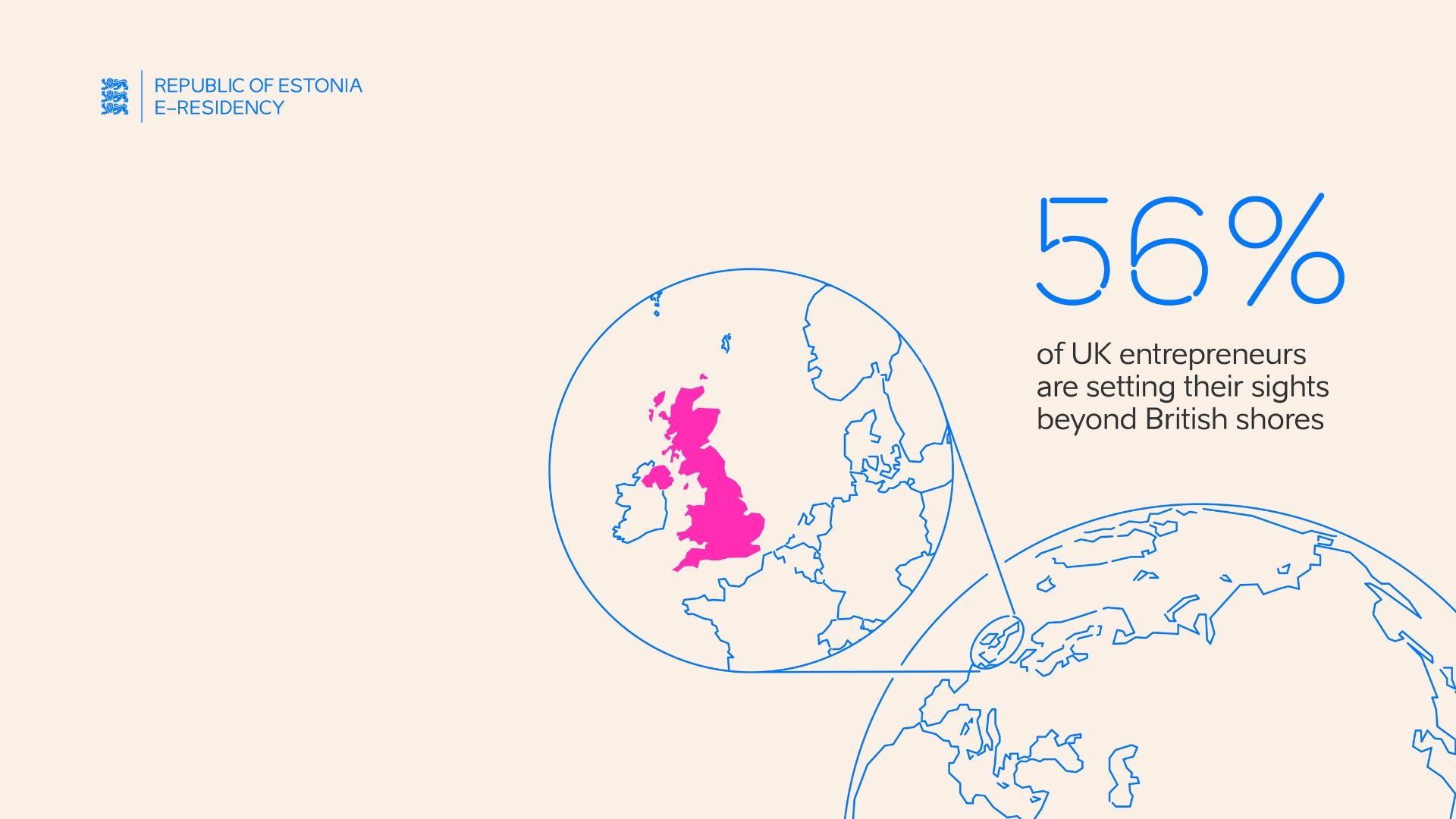
Survey data from 2025 of over 250 UK entrepreneurs shows a clear shift in mindset. While founders remain confident in the UK’s creative strength, many are planning for stability and growth overseas.

Almost three-quarters of them identified Europe as the most attractive region for business growth over the next three years. More than half of the respondents said new immigration rules make it harder to hire skilled people in Britain post-Brexit. A further 54% said that government support abroad – through grants, accelerators and R&D incentives – is more consistent and accessible than at home.

Confidence gaps are widening: 67% of founders currently pausing or winding down a venture said they no longer see the UK as a competitive place to grow a business.

Varga believes adaptability is the key. “Founders can future-proof by building for portability – choosing providers and standards that work across multiple member states,” says Varga. For him, scalability is a design principle, not an afterthought.

James Varga
James Varga, Scotland-based business advisor and cofounder of The Closing Foundry

That adaptability is driving a renewed focus on business expansion. Entrepreneurs seek digital infrastructures that enable them to grow rapidly, connect easily, and expand into new markets without unnecessary bureaucracy.

Through Estonian e-Residency, UK founders can register an EU company in hours, sign legally recognised contracts across Europe, and manage compliance online. The programme removes barriers that once limited international business expansion, helping British entrepreneurs stay competitive while scaling globally.

As Varga notes, when the foundations are shared, capital works harder – and competitive advantage comes from innovation, not paperwork.

Lessons from founders already expanding businesses overseas

Experience backs the data. British founders are already using e-⁠Residency to expand into the EU with fewer barriers and faster results.

By mid-2025, almost 3,000 UK-founded Estonian companies were operating, part of a surge contributing €68 million to Estonia’s economy in the first half of the year alone. That figure represents a 50 per cent year-on-year jump in participation and reflects a clear trend: digital infrastructure enables real growth.

When expanding into the EU, founders want fast setup, direct access to regulators and simple hiring processes.

“The less time spent on admin, the more we can focus on building the business. We ended up loving Estonia for those reasons, around the lack of friction and access to advice within the community. ‘Global first’ is a mindset everybody has there.”

James Varga, Scotland-based e-resident

Many UK e-⁠residents have chosen sectors that reflect Britain’s digital strength – consultancy, software, online retail and fintech. These industries value Estonia’s simplicity and its 24/7 online environment.

Through e-⁠Residency’s Marketplace, founders can find local service providers, accountants, and legal experts who already understand cross-border business, making it easy for them to continue serving their UK customers while expanding across the world’s largest trading bloc.

This lived experience reinforces a key theme of the research: community. Entrepreneurs who join e-⁠Residency gain both digital access and a network of professionals who share their experiences, connections, and opportunities.

Europe is the logical destination for business expansion

This shift isn’t just theoretical – the survey results confirm it. UK entrepreneurs are looking firmly towards Europe for practical reasons. More than half cited the region’s large customer base, easier access to talent and lower operating costs. Many also valued the EU’s strong digital reputation and stable regulations, both seen as vital to international growth.

Europe’s single market already provides the framework for that vision. Entrepreneurs can trade, hire and innovate across member states with fewer barriers, supported by shared regulations on digital identity, payments and data protection. Estonia, one of the most digitally advanced EU members, uses these frameworks to turn them into day-to-day tools for business.

Its e-Residency programme gives founders an EU-recognised digital ID, allowing them to sign contracts and access public services anywhere in the bloc. This digital credibility enables British startups to build trust with European partners while maintaining efficient and compliant operations.

Please  to watch this video.

The role of digital trust in international business expansion

Beyond growth figures, digital trust is now the foundation of international success. That sense of belonging, paired with the ability to operate freely, helps British startups grow with confidence in a trusted European environment.

“​​While some governments are deploying surveillance technologies and restricting online freedoms, Europe's stronger stance on privacy and data sovereignty is a positive contrast.”

James Varga

Trust is fast becoming the currency of international business. UK founders recognise this more than ever. In the latest survey, 88 per cent said digital trust will decide which startups succeed globally over the next five years, while 79 per cent agreed that digital identity technology is the most effective way to build credibility with overseas partners.

Reliable digital infrastructure is now viewed as essential as roads or broadband. Founders seek systems that protect data, verify identity, and enable secure transactions across borders.

“Founders who lean into Europe’s privacy posture win trust without slowing growth,” says Varga. He points to the continent’s strong data standards and regulatory frameworks as assets rather than restrictions.

Estonia’s example demonstrates what that looks like in practice. Its secure digital ID and blockchain-protected systems give every e-resident confidence that their business activity is transparent and verifiable. The e-Residency programme builds on this by extending access to non-residents, enabling them to use Qualified Electronic Signatures that carry legal weight across the EU.

This approach allows British entrepreneurs to manage clients and contracts across borders while meeting the same standards as EU-based companies. It also removes much of the complexity and delay that often accompany international trade.

How e-⁠Residency makes international business expansion easier

Digital identity and trust are at the heart of e-Residency’s value. The programme provides British founders with the same secure digital toolkit that Estonian citizens use daily. This enables 24/7 company management, digital tax filing, and secure document signing from anywhere in the world.

Since 2014, more than 130,000 people have joined e-⁠Residency, resulting in the creation of over 38,000 Estonian companies. Each year, these e-⁠resident businesses now account for around 20 per cent of all new companies registered in Estonia. The UK is among the fastest-growing participant groups.

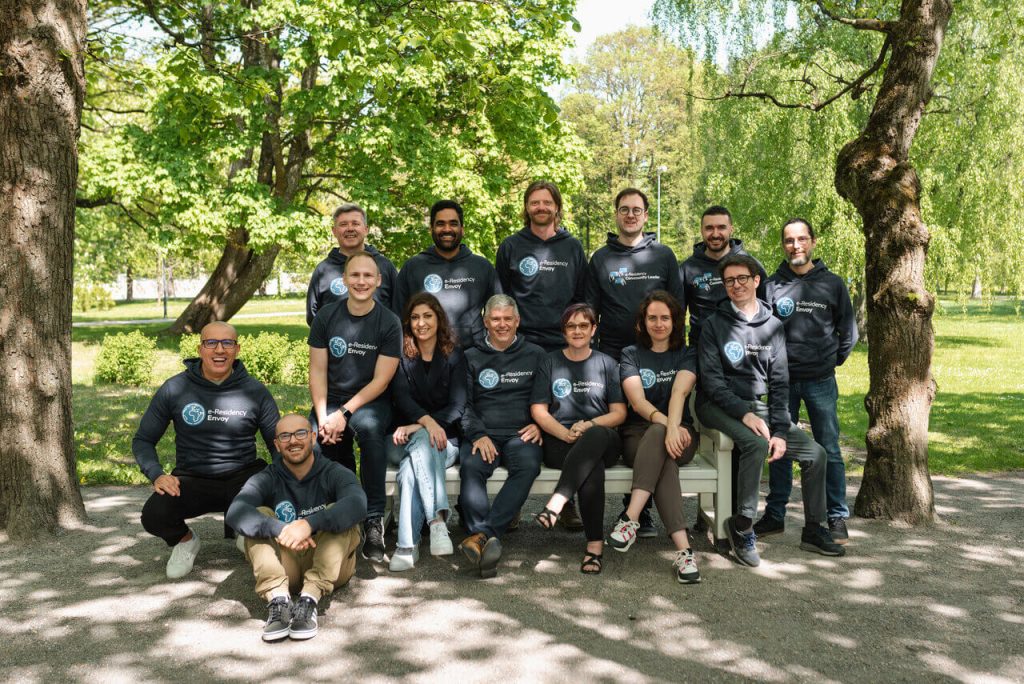
e-Residency envoys and community leaders
A handful of Estonia's more than 130,000 e-residents

Varga also highlights the security benefits of this digital foundation: “Security as a service is the startup survival strategy no one’s talking about.” He advocates viewing cybersecurity as a shared utility rather than an individual burden – an approach Estonia has already pioneered through public-private collaboration.

The e-Residency ecosystem reflects that principle. Through the e-Residency Marketplace, founders can connect with service providers for accounting, legal support and banking, all within a verified and transparent network, and every fellow e-⁠resident collaborator has already been vetted by the Estonian Police and Border Guard, as an essential facet of any founder’s due diligence.

Digital-first strategies like Estonia’s e-⁠Residency can empower UK entrepreneurs to stay global, resilient, and ready for what’s next.

Practical tips for UK startups planning overseas growth

  1. 1

    Build for portability

    Build for portability. Select tools and partners that are compatible across multiple markets, eliminating the need for system redesign each time.

  2. 2

    Prioritise compliance early

    Digital identity solutions and qualified signatures reduce friction later when expanding to new regions.

  3. 3

    Invest in trust

    Customers and partners now judge reliability as closely as price or product.

  4. 4

    Use digital infrastructure strategically

    Platforms like e-Residency streamline tax, governance and administration so founders can focus on growth.

  5. 5

    Join collaborative networks

    European ecosystems thrive on shared standards and cross-border cooperation.

Turning challenges into global opportunities

Europe’s startup potential depends on collaboration and digital trust – two themes central to James Varga’s message. “Europe’s next superpower is building a trust network for the AI age,” he says.

That trust network is already taking shape. Through secure identity systems, transparent governance and programmes like Estonia’s e-⁠Residency, entrepreneurs can operate beyond national borders while remaining fully compliant within the EU framework.

For British founders, this isn’t simply about finding new customers or reducing costs. It’s about future-proofing their businesses in a world where credibility and digital resilience matter more than ever.

By combining visionary thinking with practical digital tools, e-⁠Residency offers a model for how business expansion can work in the modern era: seamless, trusted and borderless. The opportunities are already here – the next step is to seize them.

Want to know more about e-⁠Residency?

More from e-Residency