
what does good mentoring look like?
What does good mentoring look like in business today? A look at mentoring, honesty, and decision-making in a changing world of work.
Traditional mentoring models relied on time, proximity, and hierarchy. We learned by observing and absorbing. Much of that learning happened informally, without ever being labelled mentoring.
That context has largely disappeared. Mentoring still exists, but it has fragmented into shorter exchanges – advisory calls, peer conversations, digital communities, and moments of private reflection. AI has entered this picture too, changing how we organise our thinking and prepare for conversations.
What has not changed is the role mentoring is meant to play. Business mentoring exists to accelerate judgement, reduce avoidable mistakes, and build stronger organisations by learning from experience. And, crucially, to provide emotional guidance when decisions carry weight.
We still hesitate to voice uncertainty. We still postpone difficult conversations. We still carry doubt longer than we should. Put simply, when people ask what does good mentoring look like, they are asking who helps them confront reality sooner.
At its best, good business mentoring helps someone:
- make better decisions sooner
- see what they are avoiding
- pressure-test assumptions
- learn from experience without paying the full price of failure
A new era for mentoring
The post-pandemic shift in work has reshaped how mentoring happens. Physical proximity is no longer assumed, and neither is long-term apprenticeship.
In response, new forms of mentoring have emerged. Short, focused exchanges have replaced open-ended relationships. Peer mentoring and network-based learning now sit alongside traditional one-to-one dynamics. Digital communities of practice, organised around shared challenges or disciplines, have become connective tissue across industries.
These communities create space for dialogue, shared learning, and perspective beyond organisational boundaries. They challenge the belief that deep professional growth depends on shared physical space, replacing it with something more fluid and democratic.
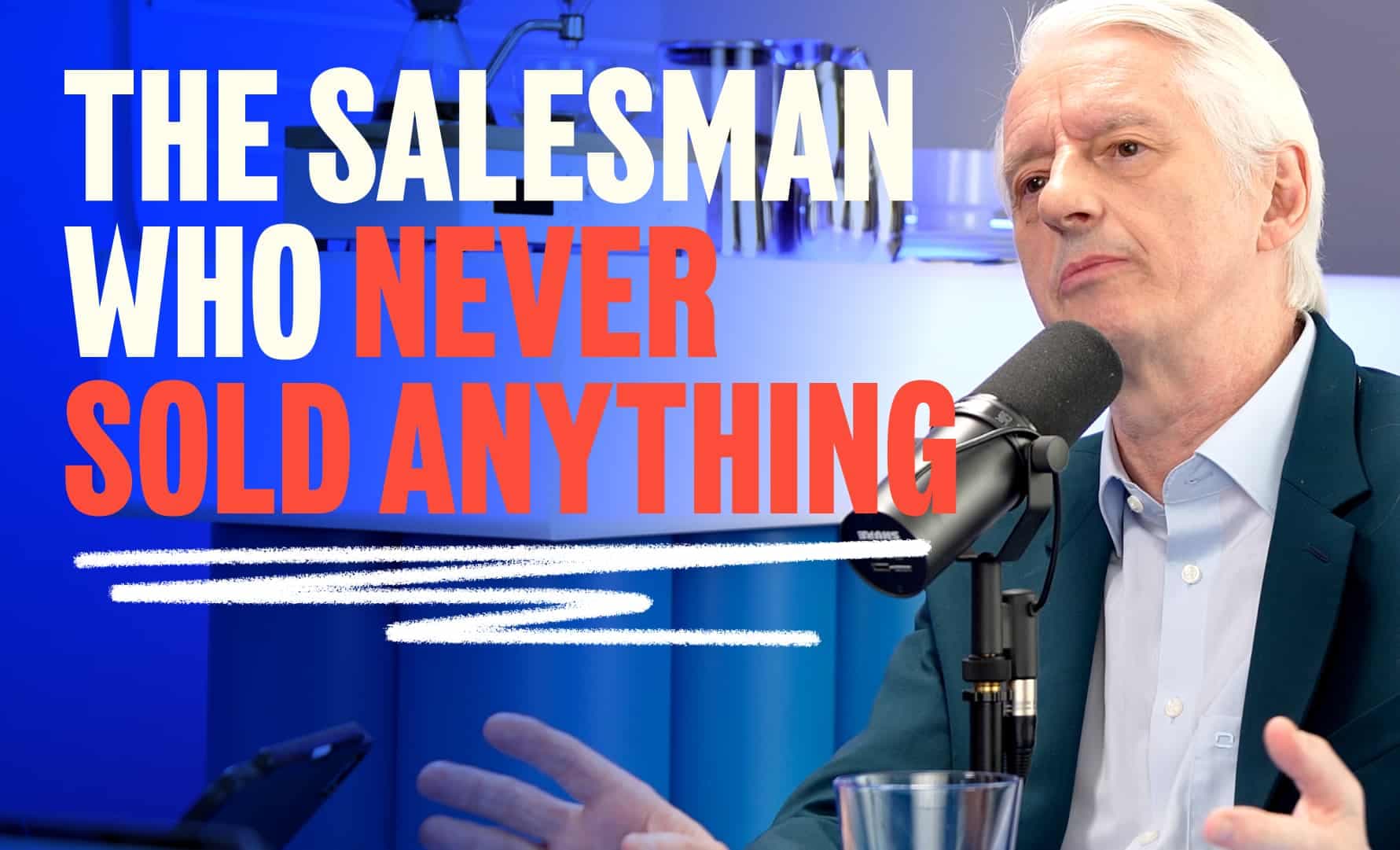
In a recent episode of Winning Friends, co-founder Pepe Villatoro describes Fuckup Nights as a form of collective mentoring – a global community where people learn through shared experience, honesty, and reflection.
Please to watch this video.
Finally, AI has entered this landscape as well. But AI operates in a world of patterns and precedents. Business decisions rarely do. They involve trade-offs, values, and judgement under uncertainty. Only a human mentor can offer intuitive, nuanced guidance.
What modern mentoring needs to deliver
The kind of mentoring that matters most in business today combines experience-sharing with judgement, challenge with support, and emotional awareness with commercial reality.
To do that well, mentors need to create conditions where people are willing to speak honestly. Research on team performance consistently shows that psychological safety increases speaking up, help-seeking, and learning behaviour – precisely the outcomes mentoring is meant to foster.
In mentoring relationships, psychological safety could look like:
- a senior leader who listens without immediately correcting
- a mentor who does not rush to reassure when someone says, “I’m not sure this is working”
- a conversation where the hardest issue is addressed first, not last
Leadership often requires projecting confidence while masking vulnerability. Without a space where doubt can be examined honestly, people either act alone or delay action altogether.
What good mentors do
Good mentors notice patterns, name avoidance, and resist the temptation to solve the problem too quickly. They create enough steadiness for the real issue to surface.
For instance, a business owner is avoiding a necessary conversation with a partner or long-standing client. The relationship feels fragile, the timing never quite right. A good mentor does not offer encouragement alone. They help clarify what is really at stake (reputation, trust, direction) and ask whether avoiding short-term discomfort is worth the long-term drift.
In another case, a leader is stuck between two strategic options. Neither is perfect. Both involve trade-offs. Meetings are held, more data is gathered, yet no decisions are made. A good mentor will point out that a decision is already being made through inaction and help the person name the cost of waiting.
An example from practice
A useful illustration appears in the Winning Friends episode with Jason Caldwell, a world-record-breaking endurance athlete and a leadership coach to Fortune 500 teams.
Early in his career, Caldwell joined an elite rowing squad where he was the least credentialled member. One teammate consistently came out on top in seat races, even though the numbers never fully explained it. Eventually, Caldwell asked him why.
The answer was not especially encouraging. The teammate was direct. You are never going to be the fastest person here, he told him. You are too small for that. Stop trying to win on metrics you cannot control. Instead, focus on being the person who makes the boat go faster when you get in.
That teammate stayed late to train with someone who needed a partner. He covered for a teammate after a night out. He took on unglamorous work that made the crew function better as a whole. When he got into the boat, people pulled harder for him not because they owed him but because humans reciprocate.
That moment functioned as mentoring precisely because it was honest. It did not protect ego or soften the message. Jason has since returned to this distinction repeatedly in his work with teams. The strongest mentoring conversations, he argues, are often the ones that name reality plainly and early.
Please to watch this video.
Where better decisions begin
For anyone asking what does good mentoring look like, the answer is that good mentoring shortens the time between sensing a problem and acting on it. It helps people face reality earlier, while there is still room to choose.
It is a relationship that requires the confidence to name what is uncomfortable, without turning the conversation into either reassurance or confrontation.
That is where better decisions begin and where fewer costly mistakes take root. Keep exploring what good mentoring looks like in practice. Watch more episodes of Winning Friends.
More from e-Residency
- Sign up for our newsletter
- Watch fresh video content - subscribe to our Youtube channel
- Meet our team and e-residents - register for our next Live Q&A