
leadership lessons from a world-record-breaking athlete
In the Winning Friends podcast, endurance athlete Jason Caldwell explains what rowing world records taught him about leading teams, alignment, and scaling beyond yourself.
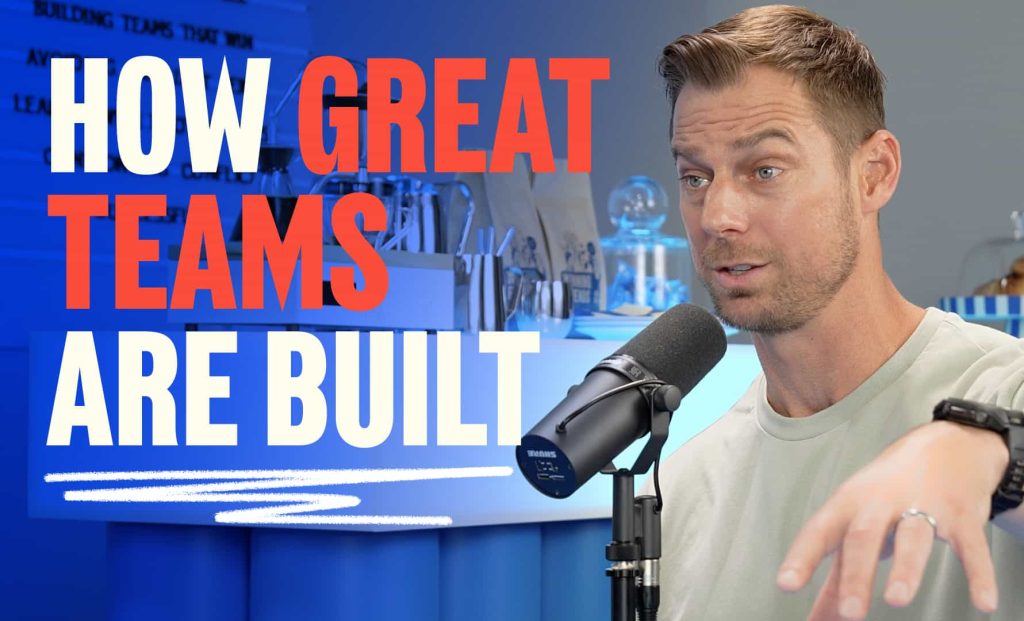
Jason Caldwell is an endurance athlete and a leadership coach to Fortune 500 teams. Among many feats, he set world speed records for rowing across the Atlantic Ocean in 2017 and from California to Hawaii in 2021. Today, he translates those hard-earned lessons into practices leaders can use.
This piece places his extreme settings next to everyday company life: storms, sleep deprivation, and zero slack alongside hiring, alignment, culture, and scale. It is not a step-by-step manual; it is a field report on what makes teams perform and why the ideas travel.
Value beats talent
Straight out of college, Caldwell flew to Philadelphia to join an elite rowing squad. He was the smallest and the least credentialed newcomer. The top seat belonged to a rower the data could not fully explain, unbeatable in seat races without the best lab metrics.
When Caldwell finally asked how he kept coming out on top, the answer was disarmingly simple and perfectly clear: “Do not try to be the fastest guy on the team. Guys like us will never be the fastest. You are too small, you are too light, you are too short. All you need to do is try to add the most value. You just need to be the guy that when you get in the boat, the boat goes faster. That is all that matters. And that is through building real, authentic relationships with these guys.”
What did that look like in practice? Extra sessions with someone who needed a partner, quiet cover after a sneaky night out, and unglamorous favours that earn respect. When he climbed into the boat, people pulled a little harder for him, not because they owed him but because humans reciprocate. That moment reframed everything for Caldwell. Stop trying to be the star – make the team go faster.
Caldwell draws a firm line between table stakes and true value. In elite sport, strength and technical excellence are the price of admission. What he looks for when building teams goes beyond that, and it starts with what he avoids. He does not want macho; he wants honesty and vulnerability, especially on day nine when someone is struggling. That is where real strength shows up and where trust compounds. This is also where the next step begins. Once you start rewarding value over optics, you can ask a different question.
Why does this team exist
When Caldwell meets an intact team, he asks for the vision statement. Many have none; others have a paragraph inherited from somewhere higher up. Either way, the antidote is the same: create a new vision statement together. Start with the why, then list a short set of hows beneath it. The how can change with conditions, but the why should anchor you.
You are unlikely to get ten people to agree on two perfect sentences. However, you do need everyone’s final fingerprints. The purpose of the exercise is ownership, which in turn creates accountability. It also surfaces useful information, because the discussion itself draws out assumptions, concerns, and ideas that leaders rarely hear in one place.
Furthermore, Caldwell encourages clients to use the vision statement as a filter, not as a slogan. When someone new joins, read them the why and listen. If they poke holes in the statement, they may not be your people. If they connect their individual why to the team why, you may have the right fit. It is your something greater versus theirs, and alignment lives in the overlap.
A story to make the point. After one of Caldwell’s world record campaigns, he helped assemble a women’s team. Their vision statement surprised him: “Elevate each other’s greatness.” There was no mention of records. He challenged it, then listened as they connected personal whys, including difficult experiences, to that shared purpose. Later, in heavy weather, they chose to protect a teammate rather than chase miles. They still won and broke the women’s Pacific record. The statement held because it was theirs.
With the why clear and owned, the next task is to keep people aligned without turning culture into a heavy lift.
Gathering points
Overloaded leaders often say they do not have time for the emotional side of leadership. Caldwell believes it is not your job to manufacture bonding; your job is to create opportunities for alignment. He calls these moments gathering points.
In practice, this means a cadence of small and low cost moments where teams can connect or realign. Some are formal, most are simple and human. Caldwell puts it this way: “Sometimes gathering points can be the basic physical ones, like happy hour. Other times being the first one to be vulnerable and transparent about something you did not do well. Leading with a little bit of love and again, taking the macho out of it.”
He also offers a tactile analogy from rowing that explains why contact matters. The teams that win races are aligned in more places along the stroke. Arms out together, bodies over together, slide up together, blades in together, drive through together, blades out together – an almost infinite number of gathering points along the cycle. Everyone in that boat can tell when they are aligned and when they are not.
With alignment sustained through small moments, leaders can address the structural risk that quietly slows growth.
Scaling beyond yourself
Key person risk is simple to understand and easy to miss: too much depends on one person, usually the founder. Sales pause when that person travels. Delivery pauses when only that person can run the play. Growth stalls, not for lack of demand, but for lack of them.
Caldwell’s advice has two parts. First, decide to grow. Second, invest early in two things. Build delivery clones, meaning capable people who can deliver to your standard so the work runs without you. Build a business development engine that keeps moving while you are on the road. Funding these moves often means taking less out personally.
He also suggests a mental reset that helps leaders reset. Instead of asking what you would do if you could not fail, ask a simpler question. Knowing what you know now, what would you have invested in at the start? The answer is usually people. Regressing to that early posture clarifies where to place your next chips.
Put it to work
- Replace macho with honesty. Reward the person who adds value, admits struggle, and makes others better.
- Write the why together. Two sentences that explain why the team exists.
- Capture fingerprints. Approval by all creates accountability on hard days.
- Use the statement as a filter. Read it to candidates and new joiners.
- Seed gathering points. Add a weekly pulse, a short reflection after milestones, and one opt-in social touch.
- Audit key person risk. List the work that stops when you are away.
- Reinvest with intent. If you were starting today, which people would you hire first?
Beyond this episode: building teams that perform
Jason Caldwell’s experience demonstrates what leaders can do to make teams stronger under pressure: prioritise value over talent, cement the vision, capture fingerprints, seed gathering points that keep people aligned, and scale beyond the founder so momentum survives travel and time.
Winning Friends is a podcast powered by e-Residency of Estonia, hosted by Logan Merrick and Dylan Hey. Each episode explores how entrepreneurs around the world build borderless businesses, design communities, and turn setbacks into growth.
Want to dig deeper into how global entrepreneurs are building borderless businesses safely? Don’t miss our article on the e-Residency programme, a way for founders around the world to launch, run, and scale companies with European access, no matter where they live.
Watch the full episode of Winning Friends featuring Jason Caldwell here.
Please to watch this video.
More from e-Residency
- Sign up for our newsletter
- Watch fresh video content - subscribe to our Youtube channel
- Meet our team and e-residents - register for our next Live Q&A