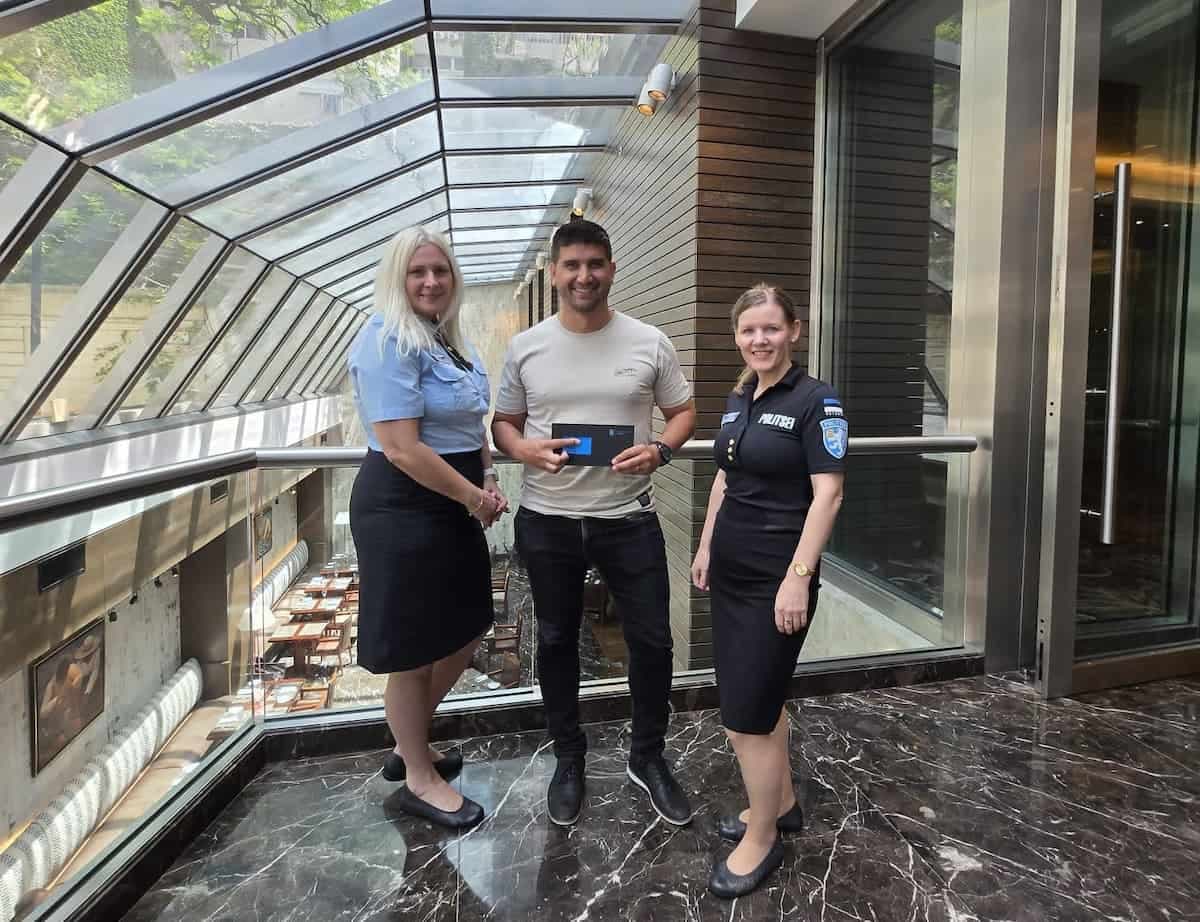

defence tech startups gather during estonian defence week
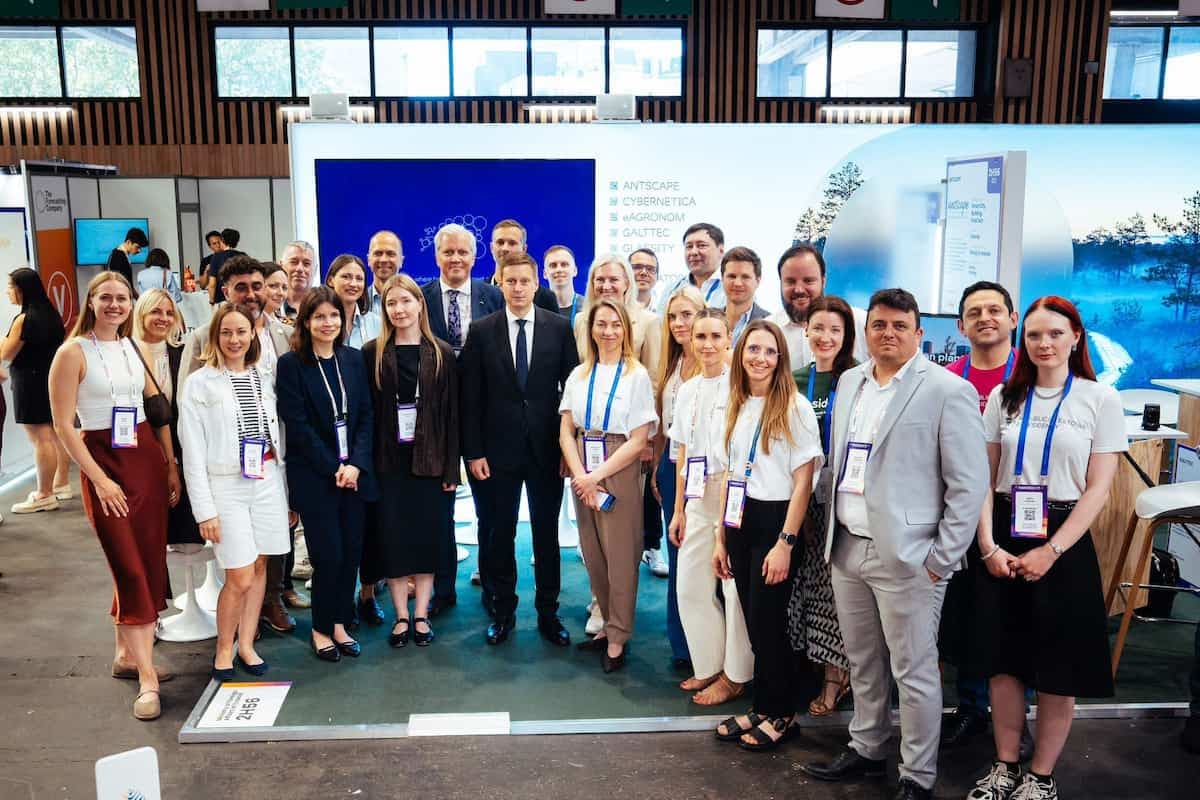
E-Residency brought defence tech startups and investors together during Estonian Defence Week 2026 in Tallinn.

What comes to mind when you think of Estonian Defence Week? Old, serious-minded men with military attachés sitting in dark rooms, discussing the latest advances on the Ukrainian front?
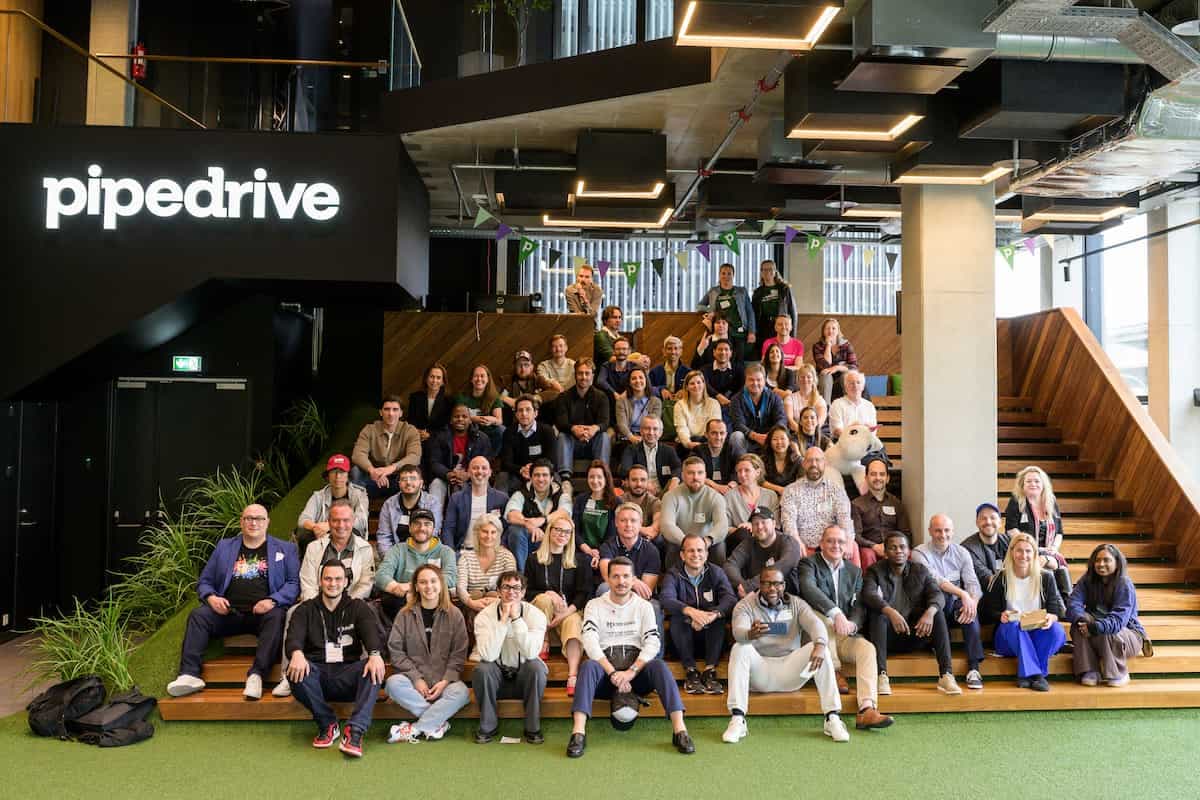
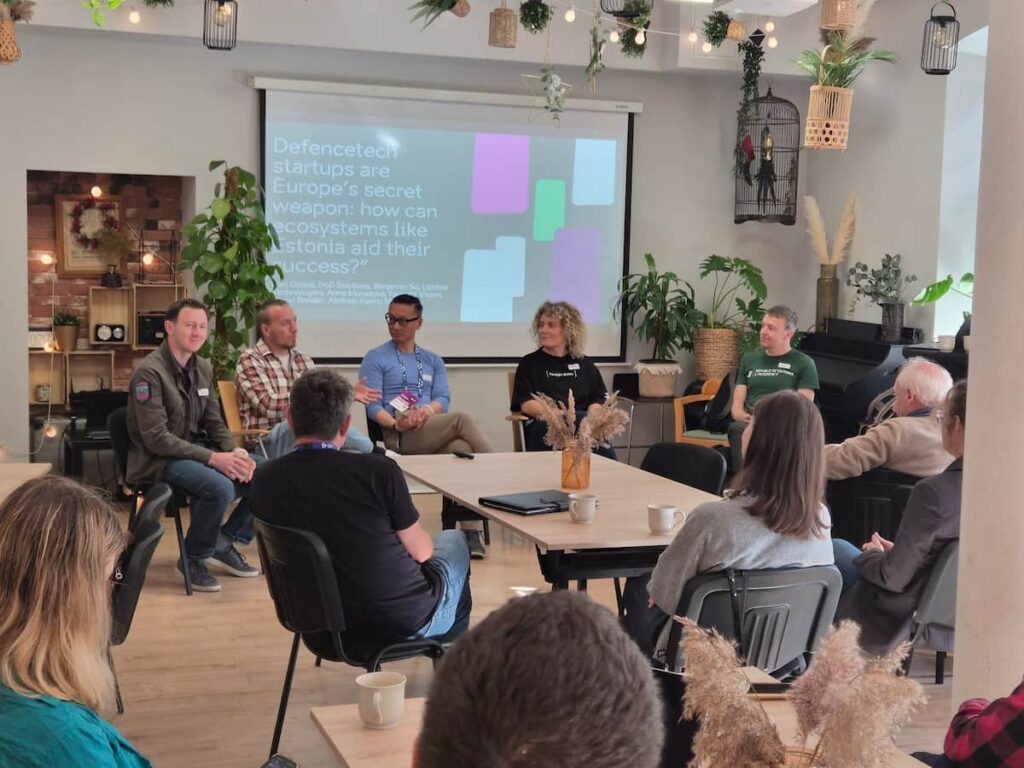
Try a brightly lit, modern meeting space in the heart of Tallinn's Telliskivi district, hot coffee, berry smoothies, a selection of pastries, and youthful attendees in sweaters or flannel shirts who look like they work for startups. In fact, they do, only that these startups are also focused on defence.
This was the scene during the Defencetech Testbed Estonia meeting, itself part of a special track for startup and tech companies hosted by e-Residency during this year's second-ever Estonian Defence Week. EDW is a networking bonanza for a community that has grown rapidly in recent years. During the week, policymakers, military leaders, procurement officials, NATO stakeholders, investors, founders and the like descend upon Tallinn to discuss defence tech.
The e-Residency startup and tech companies track included access to Defence Innovation Day on 21 September as well as the Defencetech Testbed Estonia conference. The gathering included presentations from Tehnopol, the Estonian Defence and Aerospace Industry Association (EDIA), e-Residency, and two panel discussions focused on defence tech startups. E-residents and aspiring programme members from all around the world attended.
For Benjamin So, cofounder of Uptime, an Auckland, New Zealand-based maker of a satellite-powered maritime safety and vessel-tracking device, it was his first visit to Estonia. Uptime had been looking to expand into Europe and met a member of e-Residency in Brussels.
Benjamin So, cofounder of Uptime"By the end of that event, I was convinced that I needed to set up a company here."
That's how So found himself on a cool September morning in Tallinn, talking about defence tech with founders from Chile, Austria, the UK, and elsewhere, and munching on a spinach pastry.
Estonia as a strategic launchpad
Estonia has been positioning itself as a solid base for defence tech startups for years. This has only intensified since the start of the full-scale invasion of Ukraine. Some of the scaffolding around the ecosystem is new, but it is informed by the country's decades-long efforts to build a digital society. The same benefits that all startups enjoy are available to defence tech startups.
Vootele Päi, head of dual-use and defence technologies at Tehnopol, Tallinn's science and business park, embodies these changes. Before taking on his current role a year ago, Tehnopol had no head of dual-use and defence technologies. Tehnopol's offering has been in place for years, though, consisting of office and lab space as well as access to mentor and accelerator programs. As Estonia's defence tech sector grew, it made sense for the incubator to respond.
"The whole defence segment grew organically," said Päi following a presentation during the meeting. "At some point, we discovered that we had three or four projects in defence tech."
Tehnopol expanded to accommodate defence tech just as NATO's Defence Innovation Accelerator for the North Atlantic (DIANA) opened a regional hub at its location in January 2024. Tehnopol also set up Defence Business Lab, a pre-accelerator that helps defence tech startups develop and test their ideas and prepare for international programmes.
Päi noted that the defence tech community at Tehnopol is not isolated, especially since many firms are developing dual-use technologies. At Tehnopol, they work and network alongside deep tech, health tech, and AI startups and benefit from Estonia's collaborative business culture.
Beyond Tehnopol, other support exists for defence tech, such as the SmartCap Defence Fund, which the state launched in January 2025 to invest in military and dual-use startups and specialised funds.
The role of e-Residency in defence tech
Rene Ehasalu, cluster manager for the Estonian Defence and Aerospace Industry Association, highlighted the growth in the defence tech sector during his presentation, noting that 16 members had joined in 2025 and 40 new members had been added during the course of 2026. On average, the sector has been growing about 30 percent per year, he said.
Of those companies, about a dozen were international firms setting up an Estonian base, while the remainder were Estonian-based companies, Ehasalu said. Altogether there are now 247 members. The sector saw €750 million in revenues in 2025, €450 million of which was export.
"Export is our primary focus," said Ehasalu, noting that EDIA has a 2030 revenue goal of a billion euros. Estonia has served as a hub for international defence tech companies that wish to enter the European market – and also take part in funding opportunities, such as through the European Defence Fund, Ehasalu said. It has also served as a nexus for Ukrainian companies looking to set up a European headquarters as they expand into the EU.
It is here that e-Residency comes into play, because e-residents can within a day set up their company and manage it from anywhere they happen to be. In the case of e-resident Ivan Oleksii, the cofounder and CBDO of the Estonian-Ukrainian defence tech startup DoD Solution, that place is usually Lviv in Ukraine.
"We had a Ukrainian company first, but then we realised that we would need a European entity and Estonia provided this opportunity," said Oleksii. "It's a great example on a country level of thinking outside of the box," he said.
Ivan Oleksii, cofounder and CBDO of DoD Solution"If it wasn't for e-Residency, we probably wouldn't have looked here. We would have looked at Lithuania, Germany, or Britain. But here we are today."
A collaborative community
The e-Residency Defencetech Testbed Estonia event included two panels, one for founders and another focused on the broader ecosystem. Uptime's So and DoD Solution' Oleksii took part in the founder panel, as did Anna Muradova, the COO of FarsightVision, a Ukrainian-Estonian company, and Daniel Bender, the co-founder of Alethos, a Munich-based defence tech startup.
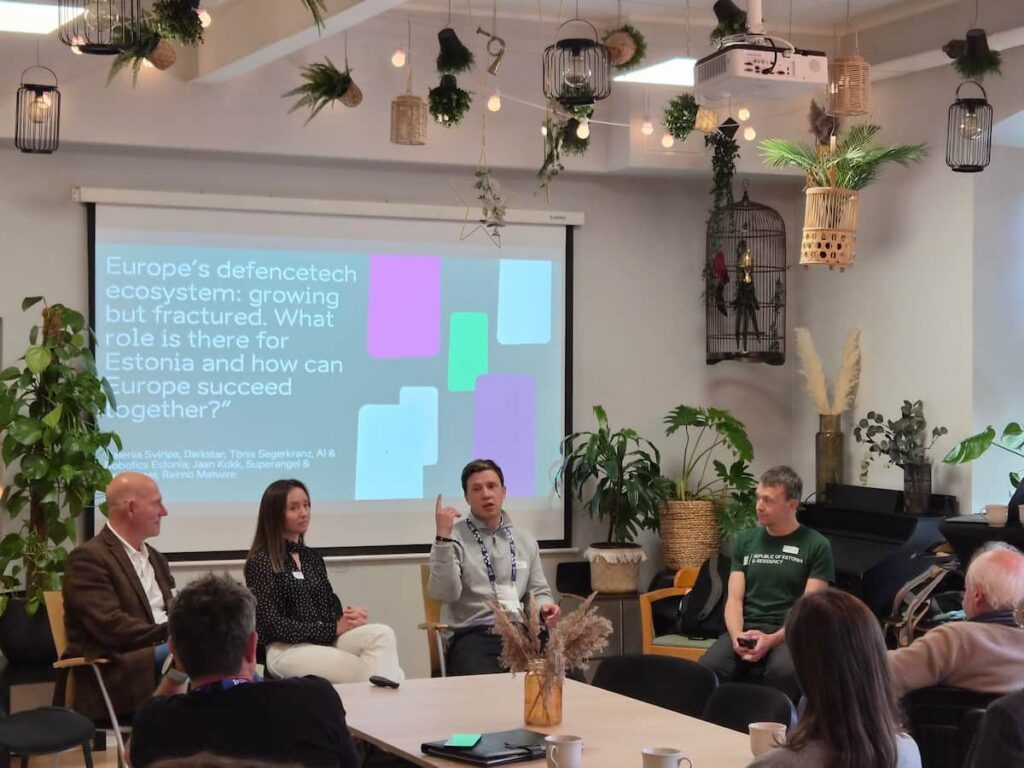
The ecosystem panel included Valeriia Sviripa, chief of staff at Darkstar, a Tallinn-based specialist venture fund investing in military technology; Tõnis Segerkranz, head of innovation at AI & Robotics Estonia (AIRE); and Jaan Kokk, an investment manager at Superangel, an early-stage investment fund and company builder, also based in Tallinn.
Both panels focused on Estonia's role as a testbed located on NATO's eastern flank and its position as an intermediary between defence tech startups and the front in Ukraine. The ease of running a business in the country was also discussed. For FarsightVision's Muradova, the perks that come with Estonia's light bureaucracy and digital society make it easier to raise money.
"And attracting funds is very important for any startup," she noted. "Not just investment funds but also European funds."
Alethos's Bender credited the Estonian startup sector's collaborative mindset, which he said set it apart from larger markets, like Germany, where companies might be less inclined to partner. "This is a small country, ecosystem, and market," said Bender. "You need to work together."
Bender is a newer e-resident. He obtained his e-Residency card just two weeks ago. The company has not yet set up an Estonian entity, but it intends to do so, in part, he said, because it will be easier to collaborate with the local defence tech ecosystem and participate in projects.
Bender is one of an increasing number of German founders who have become e-residents.
Room to grow
Superangel's Kokk agreed that Estonia's collaborative ecosystem was a major plus for defence tech startups.
Jaan Kokk, investment manager at Superangel"There is a joke that you are always two nodes away from anyone in Estonia. That's the advantage."
He also recognised the role of e-Residency in fostering that network. "You should be surprised by how quickly things move," Kokk said, referencing the speed of establishing a company, filing taxes, and accessing the country's ecosystem of digital services. Kokk recalled how it had taken him months to obtain a VAT tax code in another EU country. "In Estonia, you can get the same thing in 72 hours," he said.
While Estonia is a digital wonderland, Kokk said there is room for improvement in defence tech.
Kokk noted that during this year's Spring Storm military exercises in Estonia, there were 30 defence tech companies present to demonstrate their kits to warfighters. Some performed well, others less so, but there were situations where there was an immediate system for technologies.
That immediate demand however was tied up with challenges around procurement, Kokk said.
This is not just an Estonian issue, he noted. Around Europe, traditional procurement cycles often range from five to 10 years. But in a conflict situation, it makes sense to get the newest, best technologies into the hands of the military, following a thorough assessment, of course.
"We are still learning this balancing act of trying new kit and getting it into the hands of warfighters in a quick fashion, but without committing to new kit before testing it," Kokk said. He noted that efforts are underway to streamline procurement, so that technologies can be more rapidly assessed and procured for use.
Fast-moving changes
In addition to changes in procurement, Darkstar's Sviripa said that other shifts are underway across the defence tech landscape. For one, the Estonian Armed Forces are increasingly open to testing new technologies, she said. Darkstar has assisted in taking Estonian officers to Ukraine, where they can see the benefit of using certain technologies in the field.
And just as the numbers of defence tech companies grow in Estonia, Sviripa said, the Ukrainian sector is maturing, and Western Europe is catching on. "We are seeing more European founders and things are moving more quickly in Western Europe, though not as fast as in Estonia," she said.
AIRE's Segerkranz said that as a whole, more Estonian companies have expressed interest in applying AI and robotics in their projects and that the projects are becoming "more competitive and more serious."
A sober reminder
While enjoying a networking lunch consisting of curry, rice, and salad, it was possible for some defence themes to seem theoretical or abstract. But DoD Solution's Oleksii, who has helped to organise the delivery of cars and vehicles to Ukraine, said that before the war, he also felt the same sense of false security before he had to flee his apartment in Kyiv in February 2022.
At the lunch table he displayed photos of an Ikea bed he had just assembled the night before the invasion began, and how he propped its mattress against his windows to cushion against rocket attacks. That he was able to network with fellow e-residents did leave Oleksii hopeful though.
It was a sentiment shared by other attendees.
"I think this event is amazing," said Brooke Tapsall, an Australian drone security expert and e-resident who has cofounded several Estonian companies, including Sovereign Defence Group. "It's just what you need, to bring people together so that they can make connections."
Curious about e-Residency?

More from e-Residency
- Sign up for our newsletter
- Watch fresh video content - subscribe to our Youtube channel
- Meet our team and e-residents - register for our next Live Q&A