
why wait for EU inc. when estonia’s already got e-residency?
Estonia’s e-Residency shows how digital company formation and management can work in practice – an approach that could inspire future EU-wide initiatives like EU Inc.
The trajectory of successful European startups seems sadly predictable. After being spun out of a university or dreamed up at a hackathon, and following a string of local successes, they inevitably make the move to the big money markets like London, New York, or San Francisco. Europe, with its large common market and currency, is still seen as too fragmented to allow startups to scale. Europe may have more people than the US, but it lacks its cohesiveness.
The Draghi Report highlighted this challenge, drawing attention to how companies in Europe are forced to navigate 27 different legal and administrative landscapes, hindering their competitiveness or forcing them to leave Europe altogether. For some time now, policymakers have been brainstorming ways to address the problem. A month ago, they unveiled a solution.
Introducing EU Inc.
In January, a proposal was made to establish a pan-European legal entity that would offer startups a single uniform structure and regulatory framework. Referred to as "EU Inc.", it would function as a 28th regime within Europe, a digital entity existing alongside the other 27 member states. Companies would be able to incorporate within this 28th regime within a day or two and run their companies just as if they were in Croatia or Spain across the entire European Union. Investment processes would be standardised, stock options unified, and the capital would flow.
Companies would still pay taxes in their physical country of operations and abide by local labour laws. But under EU Inc., ideally, US and Asian VCs could more easily invest in European firms, and there would be no need for companies to reincorporate in Delaware in order to scale up.
A petition has been launched to support EU Inc., and European Commission President Ursula von der Leyen mentioned it at the 2026 World Economic Forum Annual Meeting in Davos. "We need a system where companies can do business and raise financing seamlessly across Europe," she said. "If we get this right, and if we move fast enough, this will not only help EU companies grow, but it will attract investment from across the world."
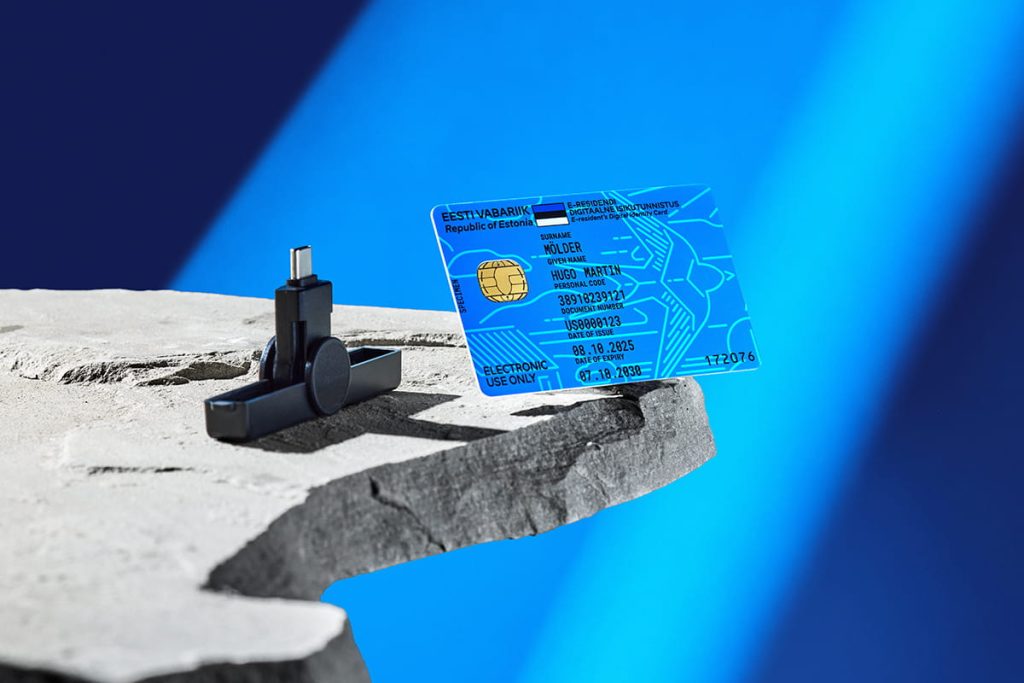
But haven't we seen this all before?
For those involved with Estonia's e-Residency program, some of the ideas contained within the EU Inc. proposal seem startlingly familiar. While the proponents of EU Inc. imagine a future where European entrepreneurs can register and run a business within days in a completely digital environment, Estonia has already made this possible for global entrepreneurs with e-Residency.
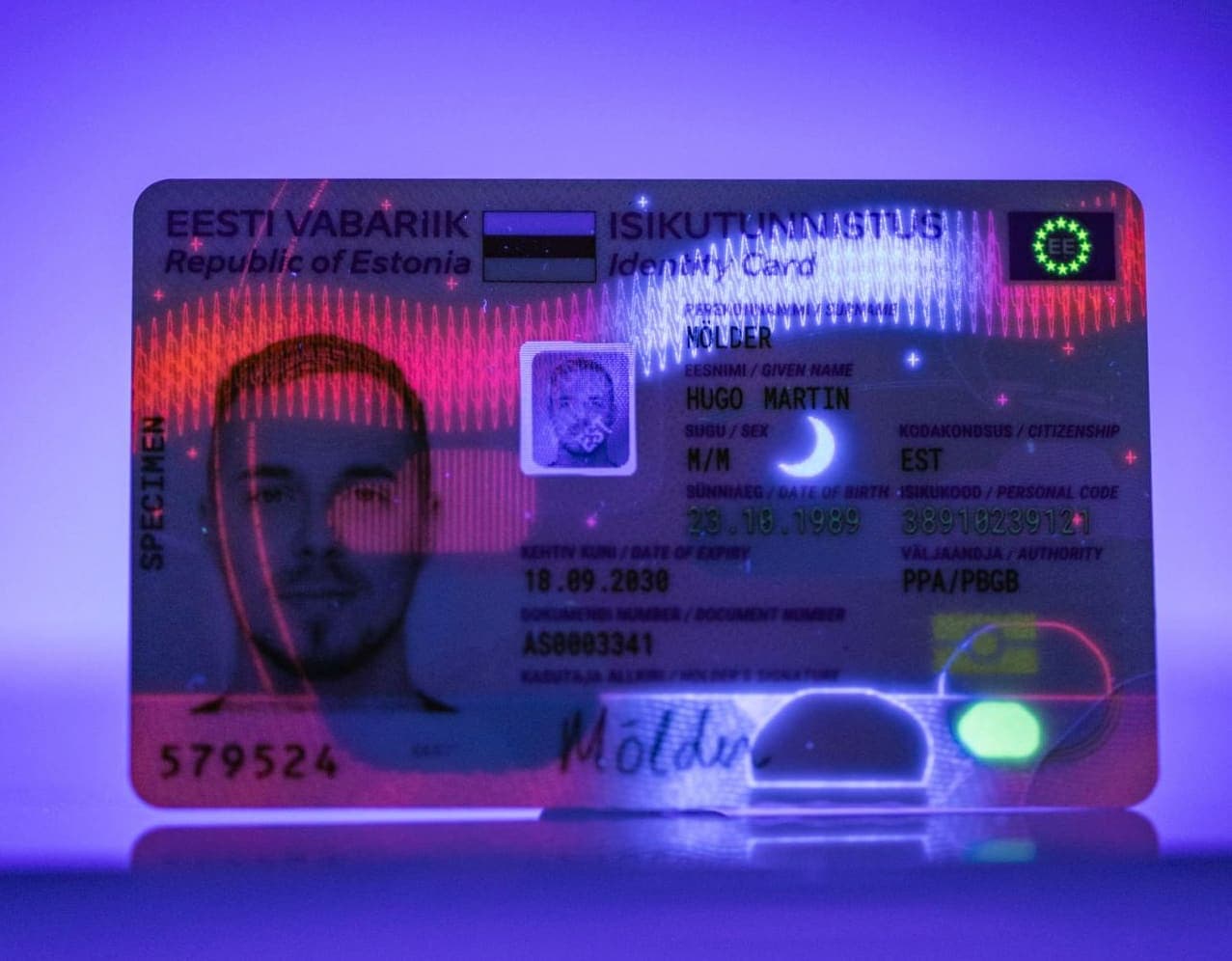
Eager to make a place for itself in Europe and the world in the 1990s, Estonian policymakers adopted a digital-first mindset. The introduction of digital identity at the turn of the century, coupled with the roll-out of government services based around a secure data exchange layer called X-Road, made it possible for Estonians to register and operate new businesses completely online.
In 2014, Estonia decided to make the ecosystem of services it had developed available to any entrepreneur who wanted in, so long as they could pass a thorough security check. Crucially, the ensuing e-Residency program enabled entrepreneurs outside the EU to open and operate a European business too, giving them a digital base from which to invoice clients. They also benefited from the country's business-friendly corporate tax system, which does not tax companies on reinvested profits, allowing startups to use profits to support long-term growth.
The program, as they say, had legs. More than a decade in, it continues to flourish. Over 135,000 people have become e-residents, the equivalent of roughly a tenth of the Estonian population. More than 39,000 companies have been set up by e-residents, half of which from within the EU. Their presence is felt heavily in the startup sector, where roughly 40% of all companies have an e-resident involved. Program membership is diverse, with citizens of 185 countries represented.
Making business easier across Europe
While von der Leyen introduced EU Inc. at Davos in January, discussions have been swirling around the concept for months. At the annual Bits & Pretzels founders festival in Munich, Estonian e-residents were asked both about the benefits of the e-Residency program, as well as for their views on EU Inc.
Please to watch this video.
A common sentiment was that e-Residency could serve as a prototype for EU Inc., in the words of Damir Tomicic, the chief strategist at run.events, a German software development company.
"Founders in Europe are facing limits," he said, "Bureaucracy, inefficiency, fragmentation, but it doesn’t have to be that way." According to Tomicic, e-Residency is "already showing the way" for how EU Inc. could work.
"With e-Residency, entrepreneurs from anywhere in Europe can start, manage, and scale," he noted. "It's a working model, a glimpse of what Europe could achieve."
Jan-Philipp Mohr, the founder and chief product officer of the healthtech firm Darvis, agreed. "I think it's the first concept in Europe that actually goes in the direction of a properly digitised governmental structure," he said.
Overcoming barriers to business
When asked about what challenges European entrepreneurs currently face in doing business in the EU, some familiar issues were raised, such as fragmentation when it comes to taxation and constraints in managing a Europe-wide business.
Please to watch this video.
"Most barriers are bureaucratic," said Marcus Rauch, CEO and cofounder of LBR Manufacturing, a provider of next-generation autonomous manufacturing solutions based in Germany.
"The need to be offline somewhere is the biggest deal for me," said Alina Ashortiia, a Ukrainian e-resident and the founder of JOIDY, a software development firm that she runs from Poland.
e-Residency as a step to EU Inc.
And when asked what their advice would be for European policymakers, the entrepreneurs surveyed at Bits & Pretzels called for what most would consider the hallmarks of the e-Residency program. Simplicity. Minimal bureaucracy. Maximum digitalisation. The tools and infrastructure for allowing European companies to grow faster without setting up a presence in every country.
"Hopefully, they will use e-Residency as an example," said Bernard Teufel of net360, a Tallinn-based provider of secure networks.
Please to watch this video.
EU Inc. is currently just a proposal, though it has the backing of major stakeholders. It's anticipated that, should things go smoothly, it could be rolled out by 2027 or 2028, meaning the first EU Inc. companies might be up and running within two years. However, getting there is not guaranteed, as member states might not all recognise the 28th regime, complicating its uptake.
And while entrepreneurs wait for EU Inc. to materialise, some are discussing that Estonian e-Residency makes sense as a step toward the 28th regime. For more than a decade, e-Residency has offered entrepreneurs a way to run a digital, cross-border business in Europe, one that has been vetted and undergone the greatest amount of test driving one could hope for.
The future of entrepreneurship in Europe
In a similar spirit to e-Residency, Estonia supports the concept of EU Inc. to make starting a business easy and fully digital, as long as the new system reduces admin for businesses and public authorities. The new format should be fully digital, simple, and accessible to all entrepreneurs.
Estonia urges the EU to build on existing digital infrastructure rather than create entirely new systems. Many of the tools companies need – such as electronic signatures, authentication, and cross-border data exchange – already exist through EU frameworks like eIDAS and the Single Digital Gateway.
E-Residency is a scaled proof-of-concept for much of what the 28th regime aims to accomplish, thus removing the need to prototype from scratch. It presents an opportunity to adopt and scale Estonia's existing technical and regulatory architecture.
In a future where it’s easier to run a business across the EU, what role will e-Residency play? In some ways, EU Inc. does resemble e-Residency conceptually. But there are differences. EU Inc., should it come into force as envisioned, is designed for the European citizen and resident in mind, while e-Residency continues to serve a global citizenry keen to access the European market. So while EU Inc. could eventually resolve European fragmentation, e-Residency will continue to work to help entrepreneurs across the globe access Europe.
Tired of waiting for EU Inc.?
More from e-Residency
- Sign up for our newsletter
- Watch fresh video content - subscribe to our Youtube channel
- Meet our team and e-residents - register for our next Live Q&A