11 firsts from estonia – one of the most innovative countries

Estonia leads the world as one of the most innovative countries. Discover 11 digital firsts – like e-⁠Residency, online voting, and blockchain-backed services.

A man standing in front of a self-driving bus, one on many innovations in Estonia
Self-driving buses are just one of many innovations in Estonia / Photo: Rasmus Jurkatam

Estonia is often listed among the world’s most innovative countries. But it doesn’t just rank highly – it breaks new ground. With a population of just over 1.3 million, Estonia has launched digital services that many larger nations still struggle to implement.

Estonia’s pioneering work in secure online infrastructure, proactive digital governance, and remote-first services distinguishes it. These innovations benefit citizens, and also power e-Residency: The country’s borderless digital identity programme that allows global entrepreneurs to start and manage EU-based businesses from anywhere.

To celebrate e-Residency’s 11th birthday, here are 11 global firsts that Estonia has achieved. These examples showcase the nation’s commitment to digital leadership – and explain why it’s the preferred base for over 130,000 location-independent founders.

1. First country to declare internet access a universal right (2000)

In 2000, the Estonian Parliament enacted the new Telecommunications Act. It declared that internet access should be ‘universally available to all subscribers regardless of their geographical location, at a uniform price’. This was a radical idea at the time, when Europe overall had about 18% household internet penetration. While other nations saw internet connectivity as a futuristic luxury, Estonia understood it as foundational to democratic participation and economic development.

This principle guided Estonia’s early investments in digital education, public Wi-Fi and broadband infrastructure. Today, the country continues to lead global efforts for digital inclusion and accessibility. 
E-Residency is an extension of this philosophy. By partnering with the UN, the programme helps entrepreneurs in underserved regions access secure, affordable tools to build cross-border businesses.

2. First SMS-based mobile parking (m-Parking) (2000)

Estonia also introduced mobile parking in 2000, enabling drivers to pay for parking via a text message. The service linked vehicle registration with phone billing, cutting queues and saving time.
Today, 95% of city parking in Estonia is managed via mobile devices. Similar solutions have since been adopted in cities worldwide, although often drivers have to deal with a mishmash of different competing apps. 

It’s another example of Estonia identifying a friction point and removing it – digitally, sustainably, and simply – while ensuring everyone pays their dues for parking. This small but meaningful change demonstrates Estonia’s commitment to efficient, citizen-centred services.

3. First paperless cabinet meetings (2000)

Estonia’s e-Cabinet system, launched in 2000, streamlined government decision-making by integrating it into a digital workflow. Ministers receive documents in advance and cast votes electronically, reducing average meeting times from five hours to just 30 minutes.

This shift set a tone for efficiency across all government processes. It also sent a clear message: bureaucracy should serve the people, not the other way around, according to one of the system’s architects Linnar Viik.

Many years later, Estonia’s advanced digital infrastructure proved its value: during the COVID-19 lockdowns, public services continued seamlessly while systems in many other countries were forced to slow down or stop entirely. Today, the same resilient, digital-first approach enables e-⁠residents to access Estonia’s government services and run their businesses from anywhere in the world.

4. First to develop and deploy X-Road data infrastructure (2001)

Estonia launched its X-Road data platform in 2001, enabling secure, decentralised data exchange between public and private-sector institutions. It’s the silent infrastructure that powers Estonia’s 100% digital government.

X-Road supports more than 1,000 organisations directly and 50,000 indirectly, and processes over three billion queries per year. It has since been adopted by other nations seeking to replicate Estonia’s “government as a platform” model and follow the example of this most innovative country.

X-Road allows both residents and e-⁠residents of Estonia to access integrated services instantly, from tax filing to business registration.

5. First country to hold binding national i-voting (2005–2007)

Estonia became the first country in the world to offer legally binding internet voting in a public election. The 2005 municipal elections marked the debut of secure online voting, followed by the 2007 national parliamentary elections, making two global firsts.

This breakthrough relied on Estonia’s national digital ID infrastructure, which enables strong authentication and end-to-end encryption. Unlike simple web-based polls, the Estonian model meets the highest standards of electoral security, transparency and trust.
Today, eligible Estonian citizens, regardless of their location, can vote securely from their computers.

6. First to implement blockchain-inspired technology in government (2012)

In 2012, Estonia became the first country to deploy blockchain-type technology to secure public-sector data. From that year onward, all data exchanges on the X-Road platform have been cryptographically timestamped to guarantee data integrity.

These timestamps verify the authenticity of every transaction and system log. Because they are immutable – not even system administrators can alter or delete them – they provide a strong defence against tampering. Each user can monitor how their personal data is used: data-tracker tools built into state platforms show who accessed their information, when, and for what purpose.

This same infrastructure protects e-resident activity, including digital signatures and document encryption. It supports Estonia’s global reputation for secure digital governance, and explains why UN experts cite it as a model for other digitally innovative countries to emulate.

7. First government-backed e-⁠Residency programme (2014)

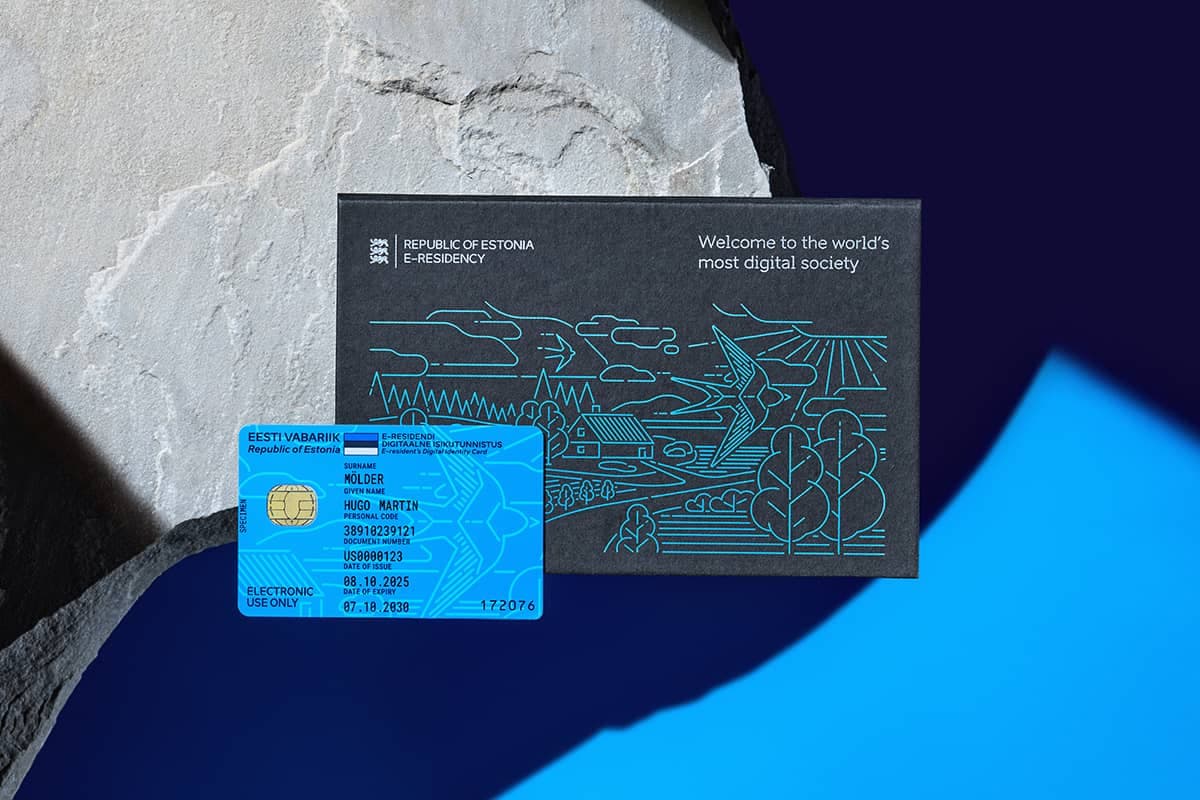
Estonia made history in 2014 by launching e-⁠Residency, the world’s first digital identity initiative open to non-residents. E-⁠residents can access Estonia’s digital infrastructure securely and remotely. 

Through e-⁠Residency, users can:

The programme supports a fully remote business lifestyle. With over 130,000 e-⁠residents and counting, it’s now one of Estonia’s most influential digital exports.

8. First data embassy (2017)

In 2017, Estonia became the first country to open a data embassy as part of its national digital resilience strategy. The Data Embassy is a secure data centre located in Luxembourg. It hosts backups of essential state systems and registries, ensuring digital continuity of critical services in the event of a major crisis, cyberattack or physical disruption.

Although the Data Embassy is located outside Estonia’s borders, it is granted sovereign status thanks to a bilateral agreement with Luxembourg. The data inside is protected using the same high security and integrity standards as in Estonia, including encryption and strict access control.  

9. First digital nomad visa (2020)

Estonia once again led the world in 2020, introducing the Digital Nomad Visa. This was designed for remote workers who wish to live in Estonia while working for foreign clients or companies. More than a third of countries have since followed Estonia’s lead, launching digital nomad visas of their own.

This innovation complements the e-⁠Residency programme beautifully. While e-⁠Residency provides digital access without physical presence, the visa allows nomads to relocate legally and stay connected to Estonia’s vibrant startup scene, world-class connectivity, and supportive ecosystem. 

There is also a respected Startup Visa to support entrepreneurs ready to scale and grow their teams in Estonia. Together, the various programmes form a complete ecosystem to support global talent.

10. First country with majority online voting (2023)

In 2023, Estonia set another global record: For the first time, over 50% of all votes cast in a national election were submitted online. It became the first country where the majority of voters (51%) actively chose digital participation over physical polling stations.

This level of uptake is made possible by the reliability of the digital ID card, trust in government systems, and the efficiency of Estonia’s electoral infrastructure. As the rest of the world debates voter fraud and electoral process confidence, Estonia sets the standard and distinguishes itself as one of the world’s most innovative countries.

11. First country with 100% of government services online (2024)

By the end of 2024, Estonia became the first country in the world where all government services are accessible online. From voting and healthcare to business registration and even divorce, Estonia has digitised every government service using a secure national ID.

For Estonians, this makes life administration wholly online-first and very straightforward. Whether renewing a passport or applying for child benefits, everything is available with digital simplicity – at any time, from anywhere.

This level of digital access has transformed daily life and public trust. It reflects a governance model that prioritises speed, transparency and user experience, and underlines what makes this most innovative country distinct.

Estonia’s journey to full digitisation also laid the foundation for extending applicable services to non-residents through e-⁠Residency, using the same secure infrastructure.

Estonia’s digital firsts: a foundation for global entrepreneurship

Estonia’s long record of innovation has created a digital infrastructure that is secure, reliable and designed to support modern entrepreneurship. These firsts sit at the core of a system that helps people run companies across borders and time zones, using tools that prioritise clarity, speed and trust.

Through e-⁠Residency, this infrastructure is available worldwide. Founders, freelancers and company owners from 179 countries use Estonian digital services to start, manage and grow EU-based businesses entirely online. They gain a secure digital identity, access to EU markets, and a legal framework designed to reduce administrative friction.

These services have been tested for over two decades by citizens and e-⁠residents across various industries and business models. Estonia continues to refine its digital systems to meet the needs of a changing global economy.

The 11 examples in this article highlight some major milestones, in celebration of e-⁠Residency’s 11 year anniversary – yet they represent only part of Estonia’s digital journey. Entrepreneurs exploring the programme will find far more to discover.

Estonia's digital firsts (2000-2024)

  1. 1

    2000 – Internet access declared a universal right

    First country to formally recognise internet access as essential for civic participation and digital inclusion.

  2. 2

    2000 – m-Parking launched

    First mobile phone-based parking payment system via SMS – now used for 95% of parking.

  3. 3

    2000 – Paperless cabinet meetings (e-Cabinet)

    First fully digital government decision-making system – reduced average meeting time from 5 hours to 30 minutes.

  4. 4

    2001 – X-Road national data exchange platform

    First secure decentralised data exchange system between public and private sectors – still the backbone of Estonia’s digital services.

  5. 5

    2005 – First binding i-voting in national elections

    First country to hold legally binding internet voting: municipal elections in 2005, parliamentary elections in 2007.

  6. 6

    2012 – Blockchain-inspired tech used in government

    First country to use blockchain-inspired technology on a national scale to verify government data integrity.

  7. 7

    2014 – Launch of e-Residency

    First digital ID programme for non-residents, enabling remote business access to Estonia’s public services and EU single market.

  8. 8

    2017 – First data embassy (Luxembourg)

    Estonia backs up government data in a foreign country under its own jurisdiction – guaranteeing service continuity.

  9. 9

    2020 – Digital Nomad Visa

    First national visa for remote workers – legalises residence in Estonia while working for foreign clients or employers.

  10. 10

    2023 – First majority online voting

    Estonia becomes the first country where over 50% of all votes cast in a national election were done online.

  11. 11

    2024 – 100% of government services available online

    Estonia digitises all public services, making it the first country where everything – including divorce – can be done entirely online.

More from e-Residency