

starting a company in germany vs estonia
This guide explains how to start a company in Germany, and how the process compares with Estonia and its e-Residency programme.
If you’re considering setting up a company in the European Union, you’ve got plenty of choices. One country that is often near the top of founders’ minds is Germany, and with good reason. Starting a company in Germany as a foreigner places you directly into the EU’s largest economy, and the world’s third largest economy. This means access to over 83 million consumers, and a market that accounts for nearly a quarter of the entire eurozone.
Bigger does not always mean better however. There are smaller countries in Europe that punch well above their weight, such as Estonia, with its e-Residency programme. In fact, Estonia gained a total of 13,828 new e-residents last year, with the highest number of which (1,122) coming from Germany.
In this article we’ll compare registering a company in Germany as a foreigner with the process of doing so in Estonia. This includes looking at costs, administrative burden, and taxes.
How to start a business in Germany as a foreigner
Germany welcomes foreign entrepreneurs. EU nationals can register a company on the same terms as German citizens. Non-EU nationals can also set up a company, but will need to meet visa and residence permit requirements before getting started. It can be a somewhat complicated and slow process when dealing with German bureaucracy.
Choose your company structure
Before registering a company in Germany, you need to decide on the company structure. There are a few to choose from, with the most likely being:
- GmbH (Gesellschaft mit beschränkter Haftung): This is the standard limited liability company in Germany, and the most common choice for foreign founders. It offers liability protection and credibility with clients and partners. One drawback is it requires a minimum share capital of €25,000.
- UG (Unternehmergesellschaft): Sometimes called a mini-GmbH, you can start one with as little as €1 in share capital, though you must retain 25% of annual profits until you reach the €25,000 threshold. After that, the capital can be increased and articles of association can be amended to transition to a full GmbH.
- Sole trader (Einzelunternehmen): This is the simplest structure with the least paperwork, but it offers no separation between personal and business liability.
How to register a company: Germany vs Estonia
Here’s where many founders will hit their first difficulty setting up a business in Germany.
Registering a GmbH
To open a GmbH, there are a number of steps that can take between two to six weeks. These include, reserving a company name, preparing articles of association, opening a German business bank account, and registering with Germany’s commercial register, the Handelsregister.
For certain parts of the process, you’ll need a notary – a legally qualified, state-appointed official who authenticates important legal documents. If you hold a compatible EU electronic ID, notarial appointments can be done online, meaning you could register your GmbH from abroad. Non-EU founders will however need to issue a notarised power of attorney, translated and apostilled.
However, this only applies if you hold a compatible EU electronic ID. Bank account opening can also be a hurdle, as most German banks require physical presence or a video identification process, and delays are common for non-EU residents.
The cost of registering a company in Germany is between €1,000 and €2,500. This includes notary fees, the commercial register filing (€150), and publication (€40). You must also deposit the minimum share capital of €25,000, of which €12,500 must be paid before registration.
Registering a UG
The UG, sometimes called a mini-GmbH, follows the same registration process as a GmbH. The key difference is the share capital requirement: you can start with as little as €1. The trade-off is that 25% of annual profits must be retained until the total reaches €25,000, at which point the company must be converted to a full GmbH. It should be noted that closing a UG can cost time and money: up to €3,000.
Please to watch this video.
Registering in Estonia with e-Residency
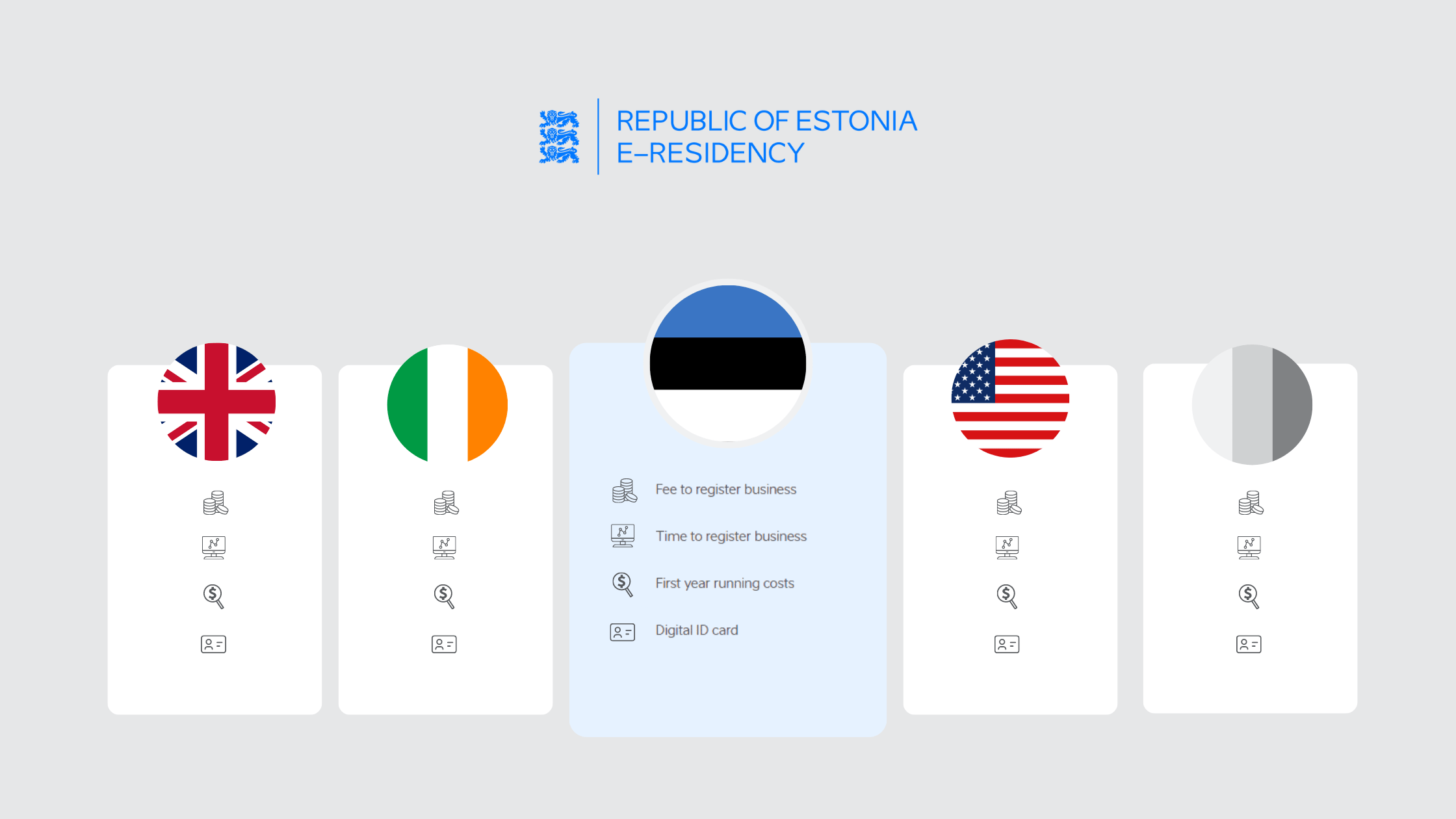
The process of registering a company in Estonia is more straightforward. It can all be done online, taking an average of just two hours to incorporate in the e-Business Register – a system similar to what is proposed in the EU Inc. initiative, but which has existed in Estonia since 2007.
It costs around €600 for the first year. This covers the e-Residency application, the cost of registering the company, and hiring a contact person. You can do this all from abroad, and everything is managed digitally using your e-Residency digital ID. You can also change your company name, address and business activities quickly and easily online without ever visiting a notary. If you ever need to close your Estonian company, it is also a relatively simple process possible to do remotely together with a liquidation provider.
Opening a business bank account: Germany vs Estonia
You must open a business bank account before you can complete your GmbH registration. That’s because you need it to deposit your share capital, and get a confirmation letter for your notary. There are fintech options, however eligibility depends on where you are based, and you need to make sure they will issue the share capital confirmation letter. Not all fintechs will do this. Traditional German banks like Deutsche Bank and Commerzbank will usually require in-person meetings with translated documents.
The process in Estonia is easy once again – you can either open an Estonian bank account, or use an EU-licenced fintech such as Wise or Revolut.
Company tax rates: Germany vs Estonia
Tax is one of the most important considerations when deciding where to register your business. Here is how Germany and Estonia compare.
Corporate tax
In Germany, there are three layers to corporate tax – corporate income tax, a solidarity surcharge, and a trade tax.
Corporate income tax is 15%. Solidarity surcharge is 5.5% of the assessed corporate income tax – this tax was introduced in 1991 as part of the German reunification process, and was supposed to be temporary, but has not been repealed for corporations. On top of these, there is a trade tax, set regionally. This typically adds another 14% to 17%, depending on where your business is set up.
A vital distinction between corporate tax in Germany and Estonia, is that in Germany these taxes apply to all profits no matter what. In Estonia, all profits reinvested into the business are tax-free, and there is no separate corporate gains tax for corporations. Estonia has a corporate tax rate of 22/78 on distributed profits. If you’re a founder focused on growth, this is a big advantage.
VAT
In Germany, most businesses carrying out taxable transactions must register for VAT. However, German-established small businesses may qualify for an exemption if their turnover did not exceed €25,000 in the previous calendar year and is not expected to exceed €100,000 in the current year. The standard VAT rate is 19%, with a reduced rate of 7% for certain goods and services.
In Estonia, VAT registration is only required once sales subject to VAT exceed €40,000 in a calendar year. Businesses below this threshold can register voluntarily. The standard VAT rate is 24%.
Dividends
Germany has a dividend tax rate of 25% plus a solidarity charge, giving an effective rate of 26.375% withheld at source. In Estonia, the same 22/78 corporate tax rate applies when profits are distributed.
Which option is best for you? Germany vs Estonia
Both Germany and Estonia offer real advantages depending on what kind of business you are running and where you are based. Here is a summary of what each one offers.
Why set up a business in Germany?
- Direct access to the EU's largest economy and its 83 million consumers
- An ecosystem with state grants available and Berlin ranked the second most attractive founder city in Europe
- Strong infrastructure, a large talent pool, and deep industry clusters across tech, fintech, biotech, and manufacturing
- The best fit if your business is primarily Germany-facing and you plan to be based there
Why set up a business in Estonia?
- Incorporation takes an average of two hours, done entirely online with no travel required
- 0% tax on all reinvested profits, with a flat 22/78 only applying when you distribute them
- No minimum share capital requirement, and first-year costs of around €600 all in
- Low administrative costs, for example for bookkeeping or legal fees when changing articles of association
- A simpler banking setup, with fintechs like Wise and Revolut accepted from day one
- Full access to the EU single market, without the administrative burden of registering in Germany
- The highest concentration of unicorn companies per capita in the EU, with startups focusing on internationalisation from day one
- #1 globally in VC funding relative to GDP (State of European Tech Report 2024)
More from e-Residency
- Sign up for our newsletter
- Watch fresh video content - subscribe to our Youtube channel
- Meet our team and e-residents - register for our next Live Q&A