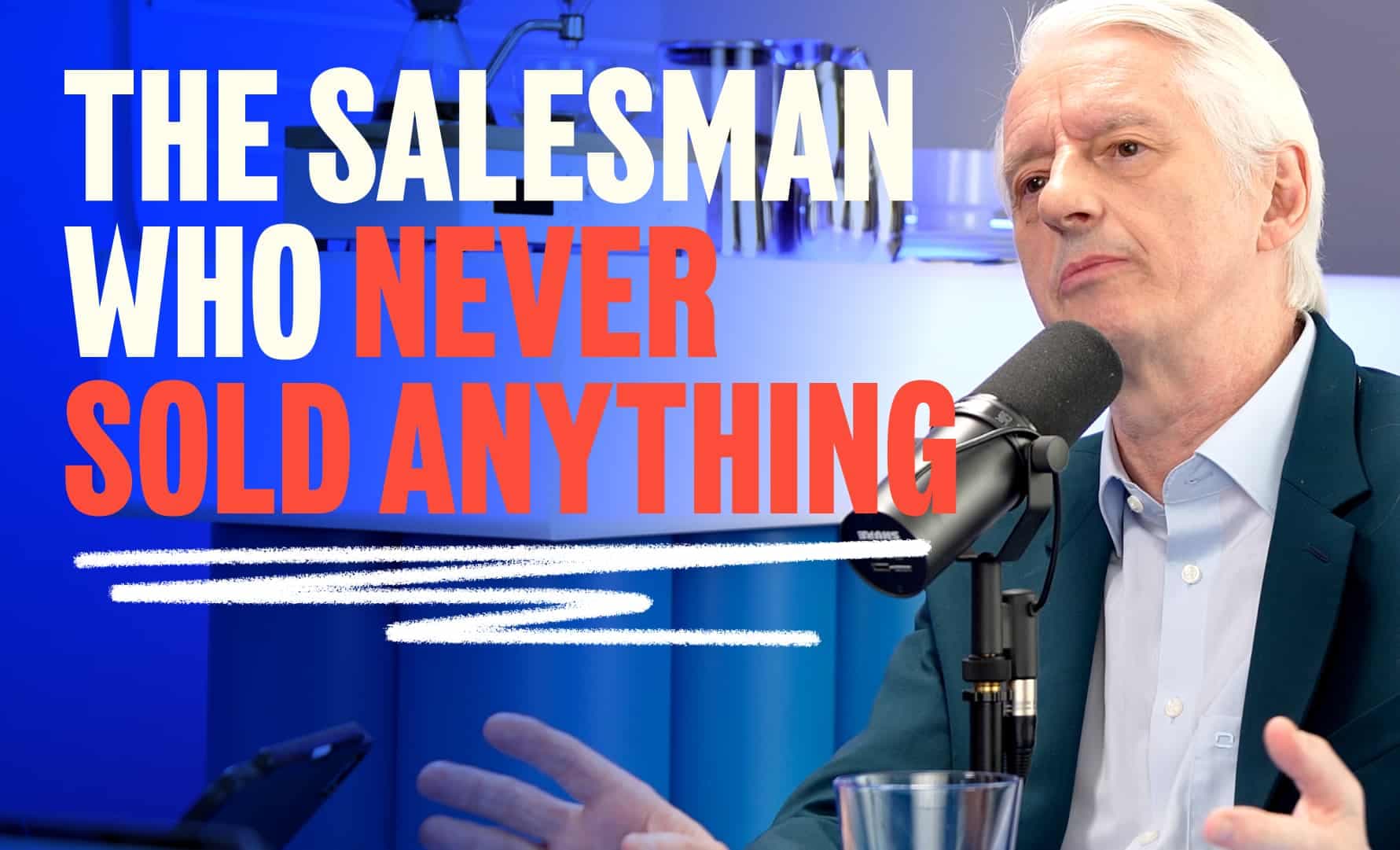

how andres kõpper treats noëp like a startup
In the Winning Friends podcast, NOËP founder Andres Kõpper shares how he treats his music career like a startup – from branding to TikTok
Before he became known internationally as NOËP, Andres Kõpper was behind the camera. In his early twenties, he directed commercials, TV series, and films in Estonia. Music was a side project, “always a hobby,” as he calls it, until one single unexpectedly went viral and suddenly a career that had been “something on the side” became his main focus.
“I had one track and thought, maybe a solo entry at Eesti Laul would be cool. But I didn’t even have an artist name,” he remembers. Eesti Laul is Estonia’s national competition for Eurovision, a stage that has launched many of the country’s artists to wider recognition. Sketching on an envelope during a film shoot, Andres rearranged a few dots on letters and came up with NOËP. “It means absolutely nothing,” he laughs. “But it looked good. In the end, it was a design decision.”
Since then, NOËP has become not just a stage name, but a product in its own right. Andres doesn’t think of it as an alter ego. He thinks of it as something to brand, position, promote, and scale, much like a startup.
The clarity problem: product vs. artistry
For Andres, the challenge has never been writing music. It has been positioning himself clearly enough to sell. “If you’re a very clear product, it’s easier for a live agent to book you. Easier for Spotify playlists to pitch your tracks,” he explains. “But if you’re vague, an indie artist doing a bit of everything, it’s harder to sell.”
That tension has defined his career. NOËP is not genre-specific: sometimes alternative dance, sometimes groovy soul. For labels and agents, that unpredictability makes him harder to package. For Andres, it keeps the work alive.
“I know the smart thing would be to stay in one lane,” he says. “But if I’m not excited, I can’t do it. The harder path is also the one that makes me better.”
“Tik what?” and the new rules of promotion
Clarity alone isn’t enough. In today’s music business, promotion is inseparable from the product – and TikTok has rewritten the rules. A platform once dismissed as a passing trend now decides which songs break through globally.
Labels, agents, and even streaming services watch closely to see what takes off on TikTok before committing marketing spend elsewhere. “We had to come up with a good TikTok campaign,” Andres recalls. “I was like, ‘Tik what?’”
For him, the shift illustrates both opportunity and pressure. Songs can explode overnight, but the process often feels mechanical. “You can’t just release a track anymore. You have to think, what’s the story around it? How will it work on TikTok? What clip will people latch on to?” he says.
The repercussions for artists are clear: virality can drive millions of streams, but it also forces musicians to adapt their creative process to an algorithm.
Hardcore fans and brand trust
For Andres, the real product isn’t just the single but the loyalty that builds around it. “What creates your business is hardcore fans,” he says. A viral track may bring millions of streams, but it doesn’t necessarily create recognition or a lasting following.
That’s why trust in the brand matters more than any one release. “Billie Eilish is all over the place with her genres,” Andres notes. “But because she has such a distinctive voice and persona, people are ready to stick by whatever she does.”
It’s the same principle Apple applies in design. You don’t need the songs or the features to be identical – what matters is that the experience feels recognisable. “When you press the home button, you always know what’s going to happen,” Andres recalls. That kind of trust is what people come back for, whether it’s a phone or an artist.
The micromanaging CEO
Behind the music, Andres is both artist and operator. He writes, produces, directs his own videos, runs his social media, and often even mixes his own tracks. “If I was the CEO of a company, I’d be the one who micromanages everything,” he admits. “Programming, design, coding, everything by myself. And in the business world, that’s not a viable model.”
He knows this slows him down, but also sees the upside: every detail reflects his voice. It’s a common founder’s dilemma: do everything yourself and keep full control, or delegate and grow faster. Andres lives with the tension.
SÜNK as proof of concept
This product mindset has spilled beyond music. In 2023, Andres co-founded SÜNK gin, a premium spirit distilled in Estonia. The name, suggested by ChatGPT minutes before a meeting, plays on both “sync” (as in syncing tracks or syncing with the audience) and the Estonian word sünk, meaning pitch-dark.
For him, the venture is not about gin per se, but about applying the same instincts elsewhere: clear branding, trusted partners, and product discipline. “What’s helped us avoid mistakes is getting the right people involved,” he says.
Beyond this episode: creativity as entrepreneurship
Andres Kõpper doesn’t just make music; he builds products. NOËP, his stage persona, is a brand he promotes, positions, and diversifies like a startup. SÜNK, his gin, is another product born from the same instincts. In both, he balances art with entrepreneurship, freedom with structure, and luck with preparation.
Winning Friends is a podcast powered by e-Residency of Estonia, hosted by Logan Merrick and Dylan Hey. Each episode explores how entrepreneurs around the world build borderless businesses, design communities, and turn setbacks into growth.
Want to dig deeper into how global entrepreneurs are building borderless businesses safely? Don’t miss our article on e-Residency, a way for founders around the world to launch, run, and scale companies with European access, no matter where they live.
Watch the full episode of Winning Friends featuring Andres Kõpper here.
Please to watch this video.
More from e-Residency
- Sign up for our newsletter
- Watch fresh video content - subscribe to our Youtube channel
- Meet our team and e-residents - register for our next Live Q&A